









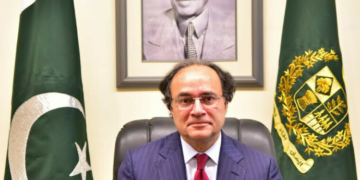
















Finance Minister Muhammad Aurangzeb has highlighted the importance of stronger federal oversight and improved coordination with provinces to ensure the successful execution of structural reforms, as the World Bank reaffirmed its backing of Pakistan’s reform programme under the Country Partnership Framework (CPF).

The remarks were made during a meeting in Islamabad on Wednesday between Aurangzeb and World Bank Country Director for Pakistan Bolormaa Amgaabazar, according to an official statement.
Talks centered on deepening collaboration under the CPF and advancing the government’s priority reform initiatives. Key areas of discussion included population and human capital development, climate resilience, agricultural reforms, energy sector sustainability, and the overall performance of the World Bank’s portfolio in Pakistan.
The finance minister stressed the need for effective implementation of the CPF, particularly in critical areas such as population management and climate change. “He underscored the need for strong coordination between federal and provincial governments to ensure coherence in policy design and implementation,” the statement said.
Aurangzeb noted that although provinces are primarily responsible for implementation, federal ministries must stay actively involved in planning, oversight, and monitoring to maintain national alignment and ownership of reforms.
Both sides discussed ways to strengthen institutional coordination, enhance transparency in project planning and target-setting, and improve monitoring systems to ensure development objectives are achieved.
The World Bank country director reiterated the institution’s commitment to close engagement with federal and provincial stakeholders, pledging to further improve information-sharing and cooperation.
Progress in the agriculture sector was also reviewed, with a focus on boosting productivity, strengthening value chains, expanding access to finance, and encouraging greater private sector involvement.
Aurangzeb emphasised aligning provincial measures with broader national reform goals to drive sustainable economic growth and employment generation.
The World Bank expressed its willingness to continue supporting agricultural transformation efforts in partnership with stakeholders, including the International Finance Corporation.
Energy sector reforms and financial sustainability were also on the agenda, with discussions covering strategies to enhance the sector’s long-term viability. Both parties agreed to maintain technical-level consultations to identify practical solutions consistent with Pakistan’s reform plans and fiscal framework.
Amgaabazar also briefed the finance minister on the overall performance of the World Bank’s portfolio and ongoing development initiatives, reaffirming continued support for Pakistan’s economic stabilisation, climate resilience, and human capital development goals.
Aurangzeb welcomed the World Bank’s partnership and reaffirmed the government’s resolve to push forward with structural reforms, strengthen governance, and ensure development initiatives deliver lasting and meaningful benefits to the people of Pakistan.