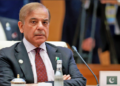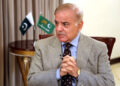






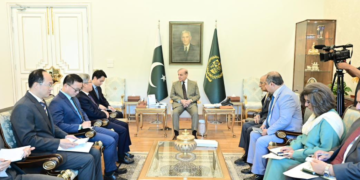





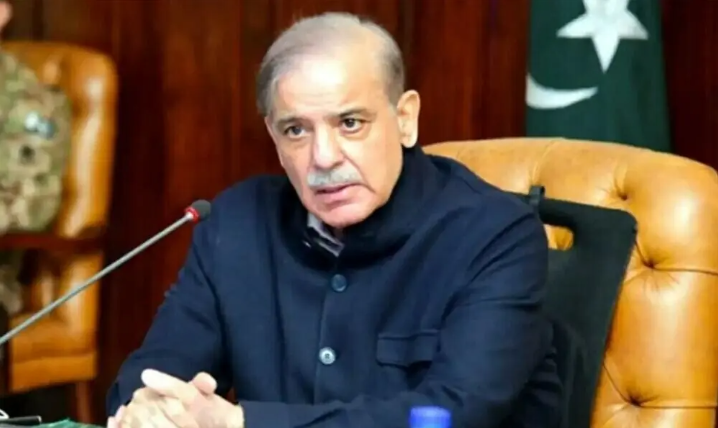
ISLAMABAD: Prime Minister Shehbaz Sharif on Wednesday indicated that direct taxes could be reduced across the board in the forthcoming federal budget, asserting that long-term economic growth cannot be sustained by continuously increasing the tax burden.

Speaking at the inaugural session of the two-day Pakistan Governance Forum 2026, attended by prominent business leaders nationwide, the premier stressed the importance of boosting production, exports, investment, and foreign direct investment (FDI).
“I believe that in the upcoming budget, we must decrease direct taxes across the board so that businesspersons and investors are facilitated,” he said.
He added that the government was aligned on the objective of lowering taxes, pointing out that indirect taxes are generally passed on to consumers rather than borne by businesses themselves.
The prime minister also criticised companies that fail to deposit collected indirect taxes with the government. “You obtain the indirect tax from the consumers, but if you keep it in your pockets, then what can be a bigger injustice to the nation,” he remarked, specifically mentioning the sugar, cement, and tobacco industries.
Citing improved enforcement, PM Sharif noted that tax recovery from the sugar sector rose by Rs36 billion in 2025 compared to the previous year, while the cement sector contributed an additional Rs60 billion. However, he warned that tax evasion by certain firms was creating unfair competition.
Reiterating the need for coordinated efforts, he said economic revival required collaboration between the federal and provincial governments as well as military leadership. “It has to be a whole-of-government approach,” he stated, adding that the state’s role was to facilitate businesses, not operate them.
“I believe that it is not the government’s duty to run businesses, it is that of businessmen,” he said, emphasising that the government should focus on enabling productivity, efficiency, research, and export growth.
He also cautioned that urgent measures were necessary to restore Pakistan’s economic standing, warning that “time is running out.”
Federal Minister for Planning, Development and Special Initiatives Ahsan Iqbal outlined the forum’s objectives, calling for actionable strategies to achieve sustainable growth. He said Pakistan could potentially become a $1 trillion economy by 2035 if it fully leveraged its strengths and urged a shift from political agitation to an “Economic Long March.” He also highlighted the launch of the PSDP Data Portal to enhance transparency and reaffirmed the government’s reform agenda, noting that international financial institutions now viewed Pakistan’s economic transformation positively.
Federal Minister for the Board of Investment Qaiser Ahmed Sheikh underscored the government’s focus on regulatory reforms and export-led growth driven by value addition and competitiveness.
Federal Minister for Petroleum Ali Pervaiz Malik detailed ongoing energy sector reforms, including the revival of the Cabinet Committee on Energy, measures to tackle gas circular debt, and the introduction of a new Tight Gas Policy. He said gas sector circular debt, which stood at Rs1,831 billion in June 2025, had declined to Rs1,816 billion by September 2025. He added that a shale pilot project was underway in Hyderabad and that the DGPC office was being restructured with support from the World Bank.
Malik also pointed to rising foreign interest in Pakistan’s energy market, noting that Turkish Petroleum had opened an office in Islamabad, SOCAR had recently visited, and Kuwait Foreign Petroleum Exploration Company was planning a visit. He reaffirmed the government’s commitment to deregulation and strengthening private sector participation.
Senator Sherry Rehman of the Pakistan Peoples Party, chairing a panel titled “Governing Pakistan in an Uncertain World,” highlighted mounting economic and demographic pressures. With public debt surpassing Rs80 trillion and unemployment on the rise, she warned of a “demographic time bomb” as three million young people enter the job market each year.
Rehman also stressed Pakistan’s vulnerability to climate change, pointing to water scarcity in Balochistan and the Sindh delta. She called for a “whole-of-country” strategy to manage environmental risks and advocated for a redesigned budget prioritising jobs, research, and development.
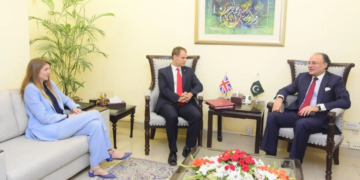
The forum additionally featured addresses by Power Minister Awais Leghari, IT Minister Shaza Fatima Khawaja, Sindh Chief Minister Murad Ali Shah, and British High Commissioner Jane Marriott.