












ISLAMABAD: Deputy Prime Minister and Foreign Minister Ishaq Dar on Wednesday said the United Arab Emirates has assured Pakistan it will roll over $2 billion in deposits, providing continued support to the country’s foreign exchange reserves and easing financial pressure on Islamabad.

Speaking informally with the media, Dar dismissed speculation that the UAE might withdraw its deposits from Pakistan’s reserves.
Responding to a question, he said discussions were ongoing with Emirati authorities to finalise the rollover arrangements, adding that the fresh extension is likely to be agreed for a longer tenure than previous arrangements.
The deposits, held with Pakistan’s central bank, are part of broader efforts to maintain exchange rate stability as the country manages its external financing needs.
Dar said talks with UAE officials were progressing positively and expressed hope that the extension would further reinforce Pakistan’s financial stability.
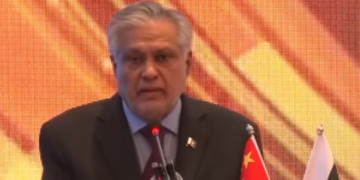
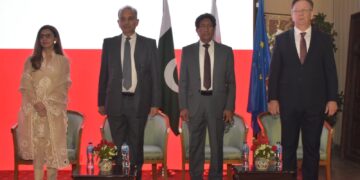
Earlier, addressing the Pakistan Governance Forum 2026 after Prime Minister Shehbaz Sharif inaugurated the PSDP Data Portal to promote transparent governance, Dar underlined the increasing importance of economic diplomacy in Pakistan’s foreign policy. He identified high-value manufacturing, information technology, mineral resources, agro-processing, and Halal food as key pillars of Pakistan’s global engagement.
“Economic diplomacy occupies a central place in our government’s foreign policy calculus. Our diplomatic outlook is profoundly focused on the economic prosperity of our people,” he said, describing strategic partnerships as vital for national development.
He added that recent engagements — including visits by Prime Minister Sharif and Chief of Defence Forces and Field Marshal Syed Asim Munir to Washington, as well as his own meetings with US Secretary of State Marco Rubio — had contributed to recent diplomatic progress.
Dar observed that Pakistan is navigating a transformative period in global affairs, where established norms, alliances, and economic frameworks are being reassessed. Despite these shifts, he stressed that Pakistan’s foremost priority remains safeguarding national security, sovereignty, and territorial integrity.
Reaffirming Pakistan’s preference for dialogue and diplomacy, he reiterated the country’s stance on resolving disputes, particularly Jammu and Kashmir, through peaceful means.
“We are acutely aware of the challenges from our neighbourhood. Persistent provocations and belligerent posturing from our eastern neighbour, and cross-border terrorism emanating from across our western border, have not diminished our commitment to peace, dialogue, and diplomacy,” he said.
Dar highlighted the government’s “whole-of-government approach,” noting enhanced coordination among the ministries of Planning, Commerce, and Finance, along with the Special Investment Facilitation Council (SIFC), to align foreign policy objectives with economic priorities.
On climate change, he said Pakistan — despite contributing minimally to global emissions — remains among the most climate-vulnerable countries. He pointed to the country’s engagement under the United Nations Framework Convention on Climate Change (UNFCCC) and the Paris Agreement, advocating climate finance, loss and damage funding, and greater adaptation support.
Discussing the evolving global order, Dar said “strategic bilateralism and minilateralism” are shaping new partnerships based on shared interests. He cited Pakistan’s deepening cooperation with China under the China-Pakistan Economic Corridor (CPEC 2.0), as well as expanding ties with Bangladesh, Saudi Arabia, Central Asian states, ASEAN countries, and nations across Africa and Latin America.
He also noted Pakistan’s support for a two-state solution for Palestine and called for an immediate ceasefire and increased humanitarian assistance for Gaza.
At the forum, Samuel Rizk, Resident Representative of the United Nations Development Programme (UNDP), said governance is a strategic choice that determines a country’s trajectory, emphasising that inclusive and transparent governance underpins sustainable development.
Muzammil Aslam, adviser to the Khyber Pakhtunkhwa chief minister, highlighted rapid digitalisation efforts in the province, stating that 170 services had been identified for digitisation, with 56 fully digitised and 73 offering electronic payment options.
Law Minister Azam Nazeer Tarar said Uraan Pakistan provides a roadmap for national reform, stressing the role of legal reforms in strengthening governance, attracting investment, and safeguarding the environment. He added that more than 900 federal laws have been digitised under the Pakistan Code and made freely accessible online, alongside efforts to streamline federal case management.