


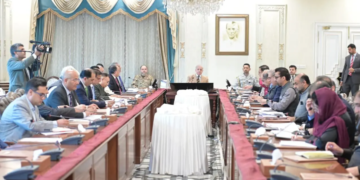

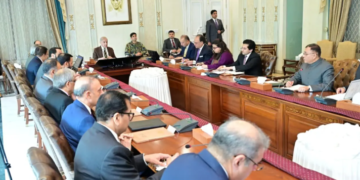






















The Asian Development Bank (ADB) on Wednesday introduced its Country Partnership Strategy (CPS) for Pakistan for 2026–2030, outlining a roadmap to support the country’s shift toward sustainable and inclusive growth driven by the private sector.

According to a press release, the five-year plan is built around three main pillars: promoting private-sector development, strengthening inclusion and empowerment, and boosting resilience and sustainability.
These focus areas will be supported by crosscutting priorities such as improved governance and institutional capacity, gender equality and social inclusion, digital transformation, and regional cooperation and integration.
“The new CPS is tailored to address Pakistan’s structural challenges and promote robust and lasting growth, which benefits the whole country, especially the poor and vulnerable,” said Emma Fan.
“It promotes strategic investments and reforms across key sectors to stimulate economic growth and create jobs. ADB looks forward to supporting Pakistan’s public and private sectors in delivering on this ambitious agenda.”
The Manila-based lender noted that Pakistan has made progress in stabilising its macroeconomic environment after facing multiple external shocks and has begun implementing key structural reforms.
The strategy reflects these developments by prioritising export- and investment-led growth, supported by stronger public financial management, a more business-friendly environment, and targeted investments in high-impact sectors. Private sector development remains central to the plan.
Under the CPS, ADB will back reforms and investments aimed at easing regulatory and compliance requirements, upgrading infrastructure, improving access to finance, encouraging public–private partnerships, and expanding private sector activity.
The strategy also highlights major opportunities in areas such as critical minerals, rail and multimodal transport, energy security and clean energy, agricultural productivity and value chains, water resource management, and skills development.
To tackle emerging challenges, ADB plans to deploy integrated solutions that combine policy reforms, financing, technical assistance, and knowledge support across Pakistan.
For inclusion and empowerment, the bank will prioritise strengthening human capital, expanding access to essential social services, and increasing women’s participation in the economy.
Given Pakistan’s vulnerability to extreme weather and natural disasters, resilience and sustainability form a key pillar of the strategy, with support planned for disaster risk management, climate adaptation and mitigation, flood and water management, food security, and air quality improvement.
ADB added that the CPS aligns with Pakistan’s National Economic Transformation Plan (2024–2029) and its own Strategy 2030 Midterm Review, while also reinforcing coordination with institutions such as the World Bank and the International Monetary Fund to maximise development impact.