




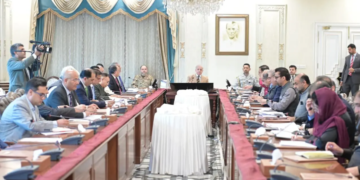


























The Competition Commission of Pakistan (CCP) has called for a comprehensive structural overhaul of Pakistan’s civil aviation sector, stressing that the industry cannot continue to be managed through fragmented policymaking.

The recommendation was presented in a report titled “Competition in the Skies: Pakistan’s Civil Aviation Market Assessment,” released on Monday. The evidence-based study analyses nearly two decades of data from 2006 to 2025 along with consultations with industry stakeholders to evaluate the state of the country’s aviation market.
According to the report, Pakistan’s aviation sector handled around 340 million passengers during the review period. Annual passenger traffic increased from 12.8 million in 2006–07 to 24.3 million in 2024–25, representing an 89% rise.
This growth corresponds to a compound annual growth rate (CAGR) of about 3.42% over 19 years. However, the increase was largely driven by international travel, which recorded a CAGR of around 5.46%, while domestic passenger traffic remained almost unchanged with a CAGR of approximately 0.19%.
Despite the rise in passenger numbers, the report notes that the sector’s structural development and competitive strength have lagged behind, particularly when compared with Pakistan’s population growth and long-term economic potential.
The study concludes that Pakistan has lacked a coherent national aviation vision, often treating civil aviation as an administrative function rather than recognising it as a strategic economic sector.
It also identifies several structural weaknesses, including the absence of a comprehensive national aviation strategy, fragmented governance, and policy inconsistencies among regulatory, fiscal, and financial institutions. Additional concerns include stagnant domestic traffic relative to international growth, frequent airline closures and financial instability among local carriers, limited aviation-specific financing frameworks, underutilised airports, and a growing reliance on Gulf-based airlines.
The report also points to competitive imbalances caused by differences in regional macroeconomic conditions as well as the presence of both domestic and foreign state-backed airlines.
Highlighting the strategic importance of aviation for economic connectivity, trade, and mobility, the report warns that regional tensions and restricted airspace in Pakistan and neighbouring aviation hubs have exposed the sector’s vulnerabilities.
This situation, it said, reinforces the need for a stronger and more self-reliant domestic aviation industry rather than heavy dependence on foreign carriers.
To address these issues, the study recommends developing a National Civil Aviation Roadmap along with a phased Reform and Stabilisation Plan aimed at creating a resilient and investment-friendly aviation ecosystem. The plan proposes integrating air travel with tourism, financing, and commercial services while ensuring regulatory clarity, competitive neutrality, financial sustainability, and better policy coordination.
Key priorities include the modernisation of Karachi and Lahore airport terminals, development of secondary airports such as Skardu and Gilgit, installation of e-gates, introduction of digital slot allocation systems, creation of a unified aviation data hub, and real-time IBMS reconciliation. These initiatives should be guided by demand-based and fiscally responsible planning.
The report further recommends developing specialised aviation and tourism financing and insurance mechanisms, maintaining predictable foreign exchange and fee policies, rationalising taxes, and promoting self-sustaining airport commercial operations with strategic private-sector participation.
Other proposals include evidence-based bilateral aviation agreements, strengthening domestic capacity, encouraging low-cost carriers, promoting SME participation in aviation services, expanding ancillary services, and developing local maintenance, repair and overhaul (MRO) facilities to improve competitiveness.
The report emphasises that maintaining competitive neutrality will be essential, suggesting that historical privileges in the sector should be reassessed while ensuring open market entry and preserving strategic oversight of critical aviation assets.
Overall, the proposed reforms aim to shift Pakistan’s aviation sector from simple passenger growth toward a more resilient, competitive, and structurally robust industry.