























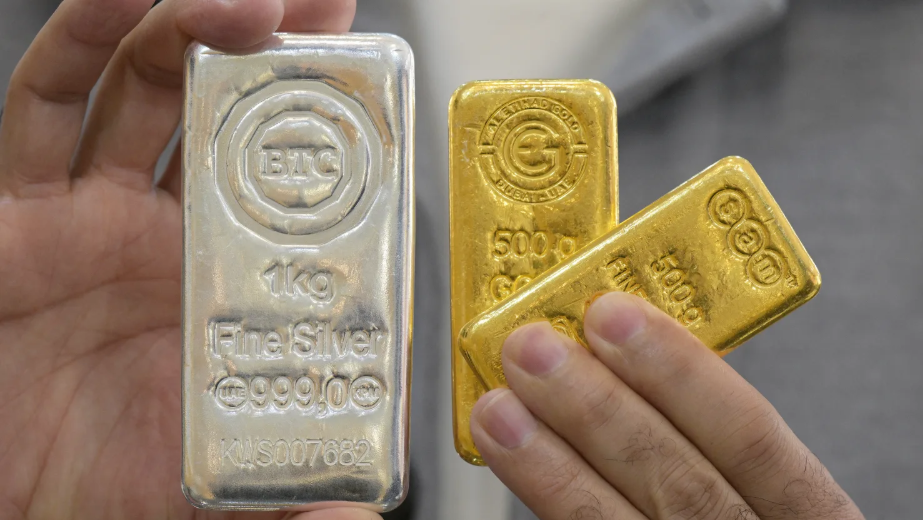
Gold and silver extended their losses on Monday, adding to the sharp sell-off that began last Friday, as a stronger U.S. dollar and widespread profit-taking sapped momentum from a rally that had recently pushed both metals to record levels.

Spot gold fell about 5% to $4,616.79 per ounce, after tumbling nearly 10% on Friday when prices dropped below the $5,000 mark. Silver also stayed under heavy pressure following last week’s dramatic 30% plunge, its steepest single-day decline since March 1980. Spot silver prices were down more than 12% at one point before trimming losses to around $78.30 per ounce by early Monday.
The sharp correction prompted CME Group to raise margin requirements, effective after Monday’s market close. Margins on COMEX gold futures were increased to 8% from 6%, while margins on 5,000-ounce COMEX silver futures were lifted to 15% from 11%.
Analysts say the pullback follows a violent reversal on Friday, when optimism over potential U.S. interest-rate cuts clashed with a sudden shift in expectations about Federal Reserve leadership. President Donald Trump’s nomination of former Fed Governor Kevin Warsh to succeed Chair Jerome Powell weighed on sentiment, given Warsh’s reputation for favoring tighter monetary policy.
José Torres, senior economist at Interactive Brokers, noted that the “Buy America” trade has regained traction, unwinding the independence-driven rally that had pushed gold and silver close to $5,600 and $122 per ounce, respectively.
Christopher Forbes, head of Asia and the Middle East at CMC Markets, described gold’s decline as a typical correction after an exceptional rally, rather than a sign of a deeper breakdown. He attributed the retreat to profit-taking, a firmer dollar, and new geopolitical signals from Washington.
The dollar index has strengthened roughly 0.8% since Thursday, making dollar-priced metals less attractive to overseas buyers and increasing the appeal of interest-bearing assets such as U.S. Treasurys. Expectations of tighter policy under Warsh have further supported the dollar, while comments from Trump suggesting a potential deal with Iran eased geopolitical tensions, pushing WTI crude prices down about 4%.
Despite the volatility, analysts expect gold prices to remain elevated in the near term as markets seek clarity on future Fed policy. Silver is still up around 16% so far this year, while gold has gained about 8% year to date. Both metals posted record-breaking rallies last year.
Forbes said renewed dollar weakness or signs of a more dovish stance from Warsh could attract buyers back into the market, maintaining a positive outlook for bullion over the next 12 months if monetary easing continues amid uneven growth and inflation.