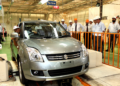



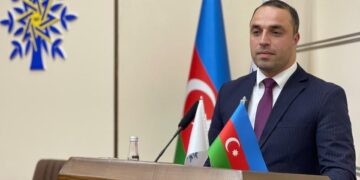





The government is preparing to unveil a comprehensive auto and tractor policy designed to reinforce local manufacturing and advance indigenisation, according to Haroon Akhtar Khan, Special Assistant to the Prime Minister (SAPM) on industries and production.

Development economists maintain that localisation and indigenisation particularly in areas where natural advantages exist are vital for building globally competitive commodity sectors aligned with evolving international markets. They argue this approach can enhance export capacity, meet domestic demand, reduce external vulnerabilities, and attract foreign direct investment.
“Largely through partnerships with local companies”, to quote the Securities and Exchange Commission of Pakistan, “the country is attracting substantial foreign investment across a wide range of sectors, particularly energy, logistics, information technology and agriculture.” Over the past three years, 79 foreign firms have begun operations in Pakistan, with international companies investing Rs40.7 billion.
Shamsul Islam Khan, a commodities and trade expert, notes that history across emerging markets shows foreign investors tend to follow domestic ones. “When domestic industry expands capacity, reinvest profits, and express confidence in long-term policy stability, foreign capital views the country as credible,” he writes in an article for The Express Tribune.
Recent data from the State Bank of Pakistan indicates that, following the easing of restrictions, profit and dividend repatriation on foreign investments rose 26pc to $1.68bn during July-January 2026.
Analysts emphasise that sustainable growth depends on consistent capital formation building factories, importing machinery, upgrading skills, and expanding exports underscoring the need for a meaningful economic reset.
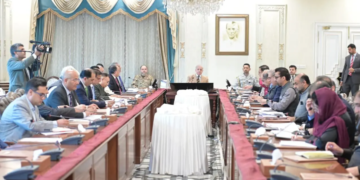
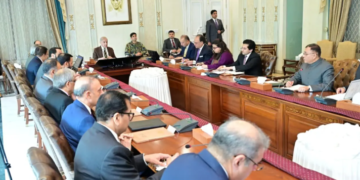
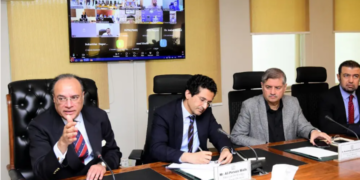
At a Feb 18 meeting with Sikander Mustafa, CEO of Millat Tractors, Mr Khan reiterated that the upcoming auto policy aims to empower industry, reinforce domestic production, and foster domestically driven growth. He assured that wide-ranging stakeholder consultations would be undertaken. Mr Mustafa highlighted that Millat Tractors has achieved 90pc localisation in tractor manufacturing and is exporting to global markets.
The government has also restructured the administration of the Export Development Fund, appointing 16 private-sector members to oversee spending and reducing bureaucratic control. The 22-member body will now be led by Omer Saeed, CEO of Service Long March Tyres Ltd, replacing Commerce Minister Jam Kamal Khan as chairman. The vice-chairman role, previously held by the commerce secretary, has been eliminated.
Meanwhile, the banking sector has voluntarily reduced the markup on the Export Finance Facility to 4.5pc. Analysts at Business Recorder observe that export growth requires alignment between policy consistency, cost competitiveness, and market access. Financing, they argue, plays a role primarily at the execution stage, after firms have secured orders, inputs, and stable operating conditions.
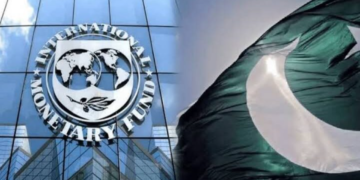
The latest assessment from the International Monetary Fund stating that its programme has “helped to stabilise the economy and rebuild confidence” has been met with caution. A Dawn editorial notes, “However, the gains made over the last couple of years are not trivial.” Yet data suggests the burden of economic adjustment has disproportionately affected lower- and middle-income groups, raising concerns about reform sustainability without parallel efforts in growth, employment, and social protection.
Despite relaxed curbs, profit and dividend outflows climbed 26pc to $1.677bn in July-January 2026 compared to $1.328bn a year earlier. In January alone, profit outflows stood at Rs119m. Conversely, foreign direct investment fell sharply by 41pc to $981m during the same period, down from $1.66bn last year.
Pakistan’s food import bill rose 19.27pc to $5.502bn in the first seven months of FY26, up from $4.613bn in the corresponding period last year. Economist Dr Tasneem Ahmad stresses that strengthening farmers is both an economic necessity and a strategic priority. “If Pakistan is serious about food security, rural stability and sustainable growth, protecting farmers from exploitation whether by markets, mafias or failure must become a cornerstone of national policy. The time of half measures is long past.”
At the same time, the trade deficit with nine regional countries widened 41.37pc to $9bn in 7MFY26, compared to $6.367bn a year earlier. The surge reflects falling exports to regional partners particularly China, followed by Afghanistan and Bangladesh while shipments to Sri Lanka declined 28.29pc. Imports from China, however, increased 24.58pc to over $11bn.
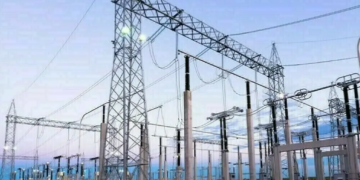
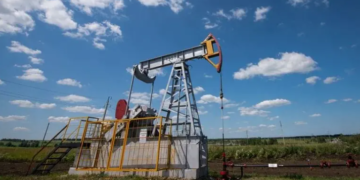
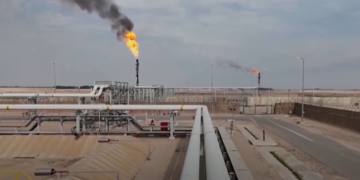
On a positive note, domestic oil and gas output has shown improvement. Oil and Gas Development Company Limited announced on Feb 20 a significant oil and gas discovery at an exploratory well in Kohat district, Khyber Pakhtunkhwa. This followed another discovery a day earlier, when the company found gas and condensate at the Dars West-3 well in Tando Allahyar district, Sindh.
However, progress on hydropower remains sluggish. The National Assembly Standing Committee on Water Resources on Feb 18 recommended 64 water and hydropower projects for FY26, costing Rs976bn, amid concerns over delayed fund releases.