















Pakistan’s chemical industry has called for urgent policy reforms, warning that escalating energy prices, tariff imbalances, and ongoing regulatory shortcomings are undermining competitiveness and limiting domestic value addition.

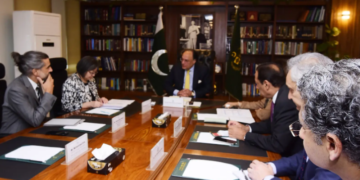
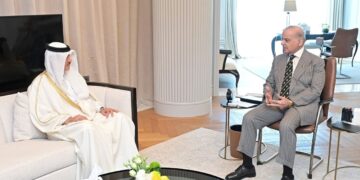
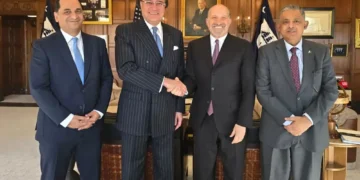
The concerns were raised by representatives of the Pakistan Chemical Manufacturers Association (PCMA) during a meeting with Commerce Minister Jam Kamal Khan to review sectoral challenges and explore structural changes aimed at strengthening the country’s industrial and export landscape, according to a statement issued Wednesday.
During the discussion, the PCMA delegation outlined key issues affecting the sector’s performance. The association’s chairman noted that high energy costs, limited access to financing, tariff rationalisation issues, and regulatory inefficiencies have intensified pressure on domestic producers. Representatives also argued that certain raw materials are being imported at minimal or zero duty without generating corresponding downstream export growth, thereby reducing incentives for local value addition.
Industry members further stressed the need to enhance quality standards and strengthen intellectual property enforcement to curb the circulation of substandard and counterfeit products. They maintained that better regulatory consistency and stronger standards enforcement would boost investor confidence and attract foreign partnerships.
The delegation also emphasised that industrial expansion should not be judged solely by export figures but should be assessed through broader economic measures, including job creation, tax base growth, and domestic market development.
In response, Jam Kamal said Pakistan’s economic difficulties stem not only from policy design but also from governance and implementation weaknesses.
He warned that without reforming internal systems such as customs procedures, regulatory enforcement, standards compliance, and institutional coordination government incentives and trade concessions would not achieve desired outcomes.
He stressed that “house-in-order” reforms are critical to ensuring that trade and industrial policies translate into real growth.
The minister called for formalised sectoral planning through structured secretariats operating under sectoral councils, with clearly defined responsibilities, mandates, and deadlines. He said these councils should move beyond consultative platforms and function as effective mechanisms for long-term economic planning aligned with Pakistan’s five-year development framework.
According to Jam Kamal, integrating structured industrial planning into national policy would strengthen coordination and improve accountability.
He reaffirmed the government’s commitment to export diversification, noting that while textiles remain a key contributor, sectors such as chemicals, pharmaceuticals, surgical goods, food processing, and other value-added industries must be developed to enhance economic resilience.
Referring to the prime minister’s broader economic agenda, he highlighted the focus on expanding non-traditional export sectors.
On trade strategy, Jam Kamal said Pakistan should engage strategically with countries where significant trade imbalances exist.
He suggested that in cases of large import volumes from certain countries, Pakistan can seek preferential market access for selected domestic products to improve trade balance outcomes. He emphasised that negotiations must be data-driven and sector-specific to yield tangible results.
Regarding export facilitation schemes, the minister supported conducting impact-based evaluations to ensure transparency and prevent misuse.
He endorsed a detailed review of existing mechanisms to assess export performance, fiscal implications, and industry-level gains before implementing future policy adjustments. He added that while genuine exporters should be supported, governance gaps must be addressed through stricter enforcement.
Concluding the meeting, Jam Kamal assured the delegation that their proposals would be reviewed and considered in ongoing policy discussions where appropriate. He reiterated the ministry’s commitment to continued engagement with industry stakeholders to promote a research-driven, transparent, and growth-focused industrial strategy for Pakistan.