












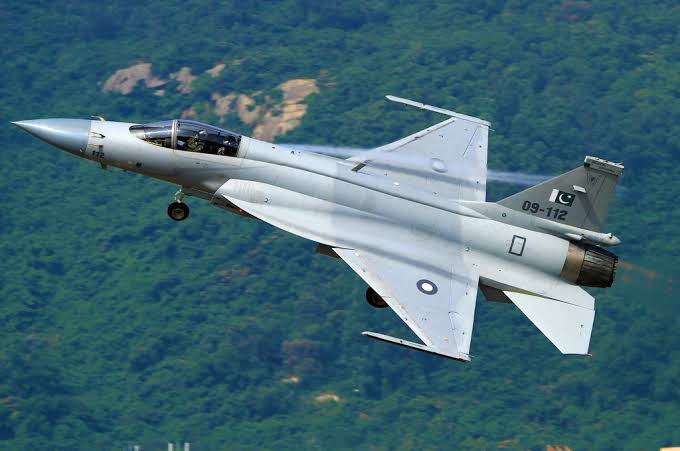
ISLAMABAD: Pakistan’s JF-17 Thunder fighter jet is witnessing a sharp rise in international interest, but the surge in potential orders could outpace the joint Pakistan–China production capacity, according to recent reports. In recent months, at least five countries — Iraq, Bangladesh, Indonesia, Saudi Arabia and Libya — have shown interest in acquiring the aircraft.

The growing demand follows heightened global attention after the jet’s performance during the May 2025 military confrontation with India. The JF-17, co-developed by Pakistan Aeronautical Complex (PAC) and China’s AVIC Chengdu, is produced in Pakistan.
At present, Pakistan manufactures around 16 to 18 aircraft per year, most of which are reserved for the Pakistan Air Force (PAF). This limited output could pose challenges if export interest turns into confirmed orders. Analysts say the JF-17’s appeal lies in its affordability and combat record. Priced between $40 million and $50 million per unit — significantly lower than Western fighters like the Rafale or F-16 — it has become an attractive option for developing countries seeking modern air capabilities at a lower cost.
So far, the jet has been exported to Myanmar, Nigeria, and Azerbaijan. Azerbaijan’s 2024 deal for 40 aircraft, valued at around $1.6 billion, marked the largest export contract to date. Potential new buyers include Bangladesh and Libya, each reportedly seeking 16 jets, while Saudi Arabia may explore a deal worth up to $2 billion for as many as 50 aircraft. Indonesia has also begun early discussions for a possible acquisition of around 40 jets.
Meanwhile, the PAF itself still needs to replace over 250 aging aircraft, including Dassault Mirages and Chinese F-7s, meaning domestic demand will remain high alongside exports. Defence experts note that scaling up production would require significant investment — a major hurdle for Pakistan given its current economic constraints.
As former Air Vice Marshal Faaiz Amir observed, Pakistan had not built extra capacity for exports in the absence of firm orders. If export deals materialize, Islamabad and Beijing may need to expand manufacturing capabilities to meet both domestic and international demand — a move that could reshape Pakistan’s role in the global arms market.