







WASHINGTON: The administration of US President Donald Trump announced on Wednesday that it is initiating two new trade investigations targeting excess industrial capacity among major trading partners and the use of forced labor, aiming to restore tariff pressure after the Supreme Court of the United States dismantled much of Trump’s tariff framework last month.

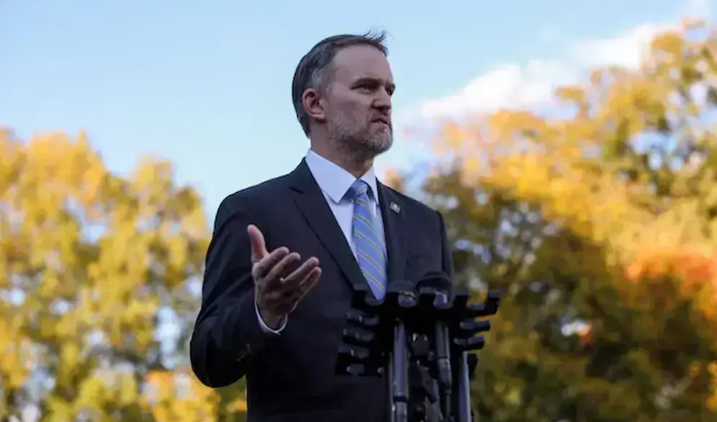
US Trade Representative Jamieson Greer said the investigation under Section 301 into unfair trade practices could result in new tariffs on imports from countries including China, the European Union, India, Japan, South Korea, and Mexico by this summer.
Additional economies under review for excess production capacity include Taiwan, Vietnam, Thailand, Malaysia, Cambodia, Singapore, Indonesia, Bangladesh, Switzerland, and Norway. Canada, the second-largest US trading partner, was not listed among the targets.
“So these investigations will focus on economies that we have evidence appear to exhibit structural excess capacity and production in various manufacturing sectors, such as through larger persistent trade surpluses or underutilized or unused capacity,” Greer told reporters on a conference call.
According to the notice issued by the Office of the United States Trade Representative, the probe highlights the automotive sectors in China and Japan, noting that many companies are operating without profitability or struggling to cover interest payments through operations.
The agency also pointed out that although China’s electric-vehicle production capacity already exceeds domestic demand, the country’s leading EV manufacturer, BYD, continues to expand internationally with factories in Uzbekistan, Thailand, Brazil, Hungary, and Turkey, while also planning further capacity expansion in Europe. Existing European automotive plants, the report noted, are operating at roughly 55% of capacity.
The USTR cited large US trade surpluses with countries such as Germany and Ireland as indicators of excess capacity within the European Union. It also highlighted Singapore’s strong semiconductor production despite a trade deficit with the United States and Norway’s significant exports of fuels and seafood.
Forced labor investigation
Greer also confirmed that on Thursday he would initiate another investigation under Section 301 of the Trade Act of 1974 aimed at banning imports into the United States of goods produced using forced labor. This probe is expected to cover more than 60 countries.
The United States has already imposed restrictions on products such as solar panels from China’s Xinjiang region under the Uyghur Forced Labor Protection Act, which was signed by former US President Joe Biden. The new investigation could expand similar measures to other countries.
Washington has long accused Chinese authorities of operating labor camps for ethnic Uyghur Muslims and other minority groups in the Xinjiang region, allegations that Beijing denies.
Greer said the goal is to encourage other countries to enforce similar bans on goods made with forced labor under trade laws that date back nearly a century.
He also indicated that the administration aims to conclude the Section 301 investigations and propose remedies before temporary tariffs imposed by Trump in late February expire in July. After the Supreme Court ruled against Trump’s global tariffs imposed under the International Emergency Economic Powers Act on February 20, the administration introduced a temporary 10% tariff for 150 days under Section 122 of the Trade Act of 1974.
The timeline for the excess capacity probe includes accepting public comments until April 15, followed by a public hearing scheduled around May 5.
Officials say the investigations provide the administration with another route to rebuild credible tariff leverage in trade negotiations and enforce agreements with key partners.
Greer said the move should not surprise US trading partners and urged them to comply with existing agreements, though he did not confirm whether compliance would shield them from possible new tariffs.
He added that Trump remained committed to using tariffs as a policy tool.
“He’ll find a way to deal with unfair trading practices. He’ll find a way to get our trade deficit down. He’ll find a way to protect U.S. manufacturing. We have a lot of tools to do it,” Greer said.
The probes come as Trump administration officials led by US Treasury Secretary Scott Bessent prepare to meet Chinese representatives in Paris, ahead of a planned meeting between Trump and Chinese President Xi Jinping in Beijing later this month.
Trump previously used a Section 301 investigation during his first term to impose tariffs of around 25% on many Chinese imports, a move widely viewed as legally robust because the law has historically withstood court challenges.
The new probe into excess industrial capacity reflects longstanding concerns raised by both the Trump and Biden administrations about heavily subsidized manufacturing in China that floods global markets with low-priced goods.
Greer said the investigation will examine indicators such as large global current-account surpluses, government subsidies, suppressed wages, non-commercial activities of state-owned enterprises, weak labor and environmental standards, subsidized lending, and currency policies that distort trade.