




















ISLAMABAD: The International Bank for Reconstruction and Development (IBRD) has approved a $378.9 million loan for a major power transmission project in Pakistan.

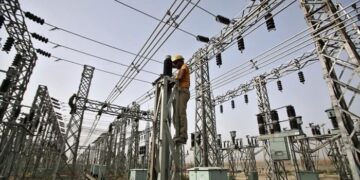
The initiative, aimed at improving the country’s transmission infrastructure, is designed to enhance energy security, optimise operational performance, and enable greater integration of renewable energy.
The financing will primarily support the installation of reactive power management devices, key to stabilising the transmission system and enabling the smooth transfer of renewable energy. The National Transmission and Despatch Company (NTDC) will benefit from technical assistance for institutional reforms, alongside the co-financing of $92.5 million from the Asian Infrastructure Investment Bank (AIIB) and $92.7m from the Islamic Development Bank (IsDB).
Total project financing is expected to reach $698.75m, with the World Bank set to approve the plan in mid-March 2026. This project is a significant step towards modernising Pakistan’s energy sector and addressing persistent transmission challenges that hinder the delivery of low-cost electricity.
Loan aims to boost grid stability, enhance renewable energy deployment and address transmission bottlenecks
A World Bank document outlining the initiative notes that the project’s primary goals include enabling large-scale renewable energy deployment, enhancing grid stability, and advancing sector reforms. The first phase of the project will focus on reactive power devices, which are critical for addressing grid reliability issues and integrating Variable Renewable Energy (VRE).
AIIB’s financing will support co-financing arrangements for reactive power compensation devices, while IsDB’s contribution will focus on different procurement packages in the initial phase.
The entire project will span from 2026 to 2035 and includes two key tracks: infrastructure upgrades, such as a 500kV transmission corridor, and institutional reforms aimed at strengthening governance and supporting the unbundling of the transmission sector.
Pakistan’s energy generation capacity has more than doubled since 2010, reaching 46,221MW in 2024, with peak demand projected to hit 37,224 MW by 2034. The country is also committed to increasing its renewable energy share to 60 per cent by 2030. However, despite surplus generation capacity, transmission bottlenecks particularly along the south-central-north corridors continue to impede reliable delivery of electricity. These constraints contribute to financial losses and underutilisation of renewable energy, including curtailed wind power in the Jhimpir-Gharo corridor.
The Transmission System Expansion Plan (TSEP) 2024-2034 estimates the need for $5.6bn in additional investments due to delays in existing projects. Transmission bottlenecks have led to increased reliance on high-cost LNG-based generation, pushing up electricity prices. According to the National Electric Power Regulatory Authority (Nepra), average generation costs reached 12.76 cents per kWh in July 2024, significantly above regional benchmarks.
The World Bank’s loan is a critical component in addressing these challenges. The project’s impact will be measured through indicators such as renewable energy capacity enabled, seasonal transmission transfer limits, and improvements in grid stability. By modernising the transmission network, the project aims to reduce reliance on costly thermal generation and increase the deployment of clean, renewable energy.