




















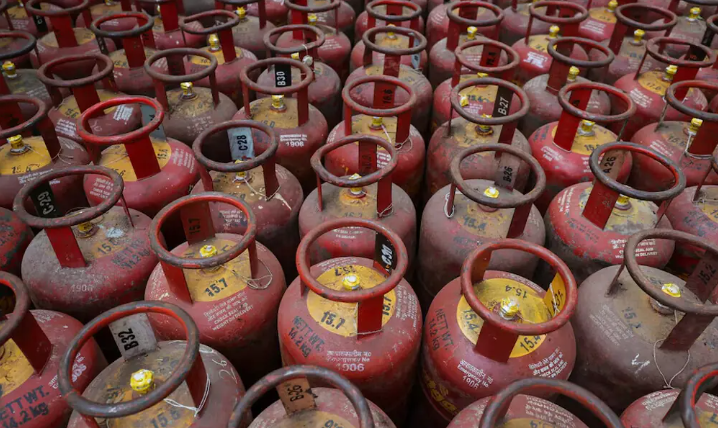
NEW DELHI: India is leveraging a cooking gas shortage caused by the Iran conflict to tighten its domestic distribution system and accelerate a transition toward piped gas, aiming to reduce reliance on liquefied petroleum gas (LPG) imports and subsidy costs.

The government has invoked emergency measures to ensure that limited LPG supplies are prioritised for household use and plans to discontinue LPG provision after three months for consumers already connected to piped gas networks.
Last month, authorities introduced an order setting strict timelines for pipeline approvals, with permissions automatically granted if officials fail to respond within the stipulated period. The directive also requires landowners and local authorities to facilitate pipeline access.
“Witness rapid expansion of CGD (city gas distribution) network across the country a crisis turned into an opportunity”, said Neeraj Mittal, secretary of the Ministry of Petroleum and Natural Gas, in a social media post.
In March, the country added 580,000 households to its piped gas network, a sharp increase from 342,300 connections in the same month last year.
India, the world’s second-largest LPG importer, meets around 60% of its demand through overseas purchases. In 2025, it imported approximately 22 million metric tons of LPG—mainly from the Middle East—at a cost of nearly $12 billion.
The recent supply disruptions have highlighted the country’s dependence on imports, prompting authorities to take steps to better manage supply and demand.
According to Prashant Vashist of ICRA, these measures including expanding piped gas could reduce LPG imports by 10% to 15% by 2030.
India currently meets about half of its natural gas demand through liquefied natural gas imports.
“This (shift to natural gas) would cut the companies’ revenue losses on the sale of domestic LPG and would also reduce the subsidy burden,” he said.
Transitioning consumers to piped gas, which is priced closer to market rates, is expected to ease fiscal pressure while improving supply efficiency.
Fuel retailers sell LPG to commercial users at market rates, while household consumers receive subsidised cooking gas at prices roughly 56% lower.
Last year, limited compensation to retailers cost the government $3.4 billion.
Since the conflict began, companies such as Indraprastha Gas, Mahanagar Gas, GAIL Gas, and Bharat Petroleum Corp have introduced incentives, including reduced installation charges for piped gas connections.
India has around 333.7 million LPG household users, including 106 million low-income families benefiting from subsidies.
Currently, gas suppliers connect approximately 2 million to 2.5 million new consumers each year, bringing the total number of piped gas users to 16.3 million as of December.
With recent policy changes, this pace is expected to increase to about 7.5 million connections annually, according to Gajendra Singh, a former member of the Petroleum and Natural Gas Regulatory Board. This could raise the total number of users to between 35 million and 40 million by 2030.
“This expansion would cut LPG imports and offer a safer, more convenient alternative for households,” he added.