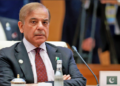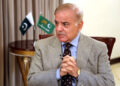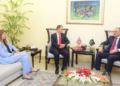

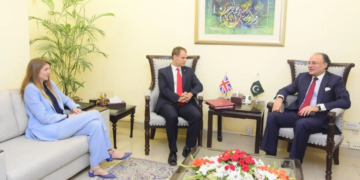




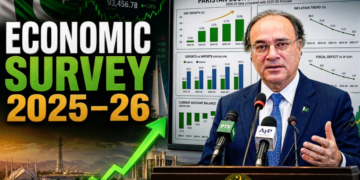
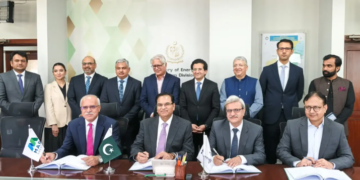
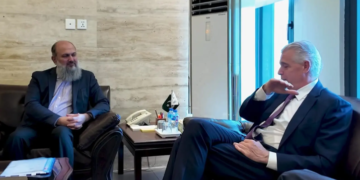
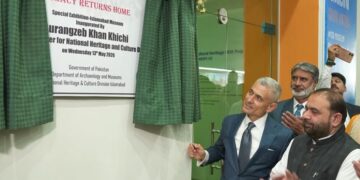
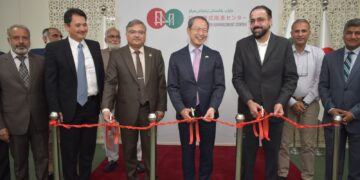

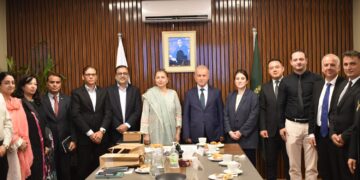

WASHINGTON, D.C.: Federal Minister for Finance and Revenue Senator Muhammad Aurangzeb continued a series of high-level engagements at the IMF–World Bank Spring Meetings, holding bilateral discussions with global financial leaders, development partners, and international investors, while also speaking with leading US and international media.

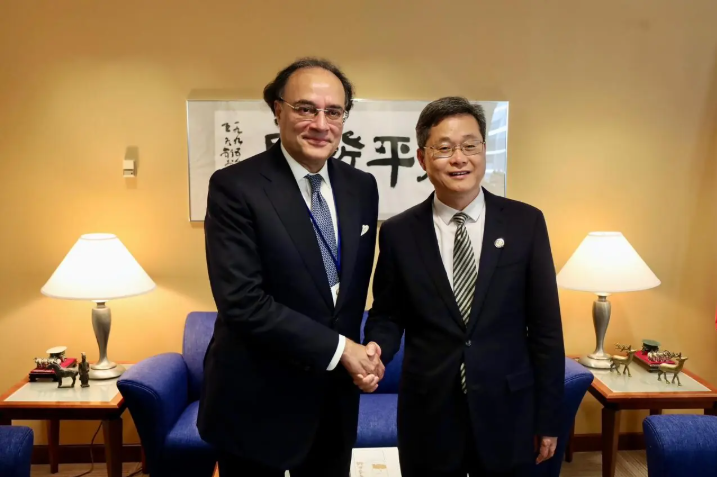
According to a Finance Ministry statement, Aurangzeb met with Chinese Finance Minister H.E. Lan Fo’an and expressed appreciation for China’s consistent and strong support for Pakistan.
He also acknowledged the constructive role of China’s Executive Director at the IMF in supporting Pakistan’s programme discussions.
“The Minister briefed his counterpart on Pakistan’s progress under the IMF programme, including the successful conclusion of a Staff-Level Agreement for the Third Extended Fund Facility (EFF) Review and the Second Resilience and Sustainability Facility (RSF) Review, with IMF Board approval expected in early May,” the statement said.
Aurangzeb shared updates on Pakistan’s first Panda Bond issuance and noted the increasing use of Renminbi in bilateral trade, stressing the importance of expanding the currency swap arrangement to facilitate growing trade volumes.
“He appreciated China’s acknowledgement of Pakistan’s active mediation role in the ongoing regional conflict and reaffirmed Pakistan’s full and unconditional support for the establishment of the SCO Development Bank during Pakistan’s upcoming Presidency of the Shanghai Cooperation Organization (SCO).”
The meeting ended with both sides reaffirming continued cooperation at the IMF and World Bank.
Separately, Aurangzeb met with Dr. Pan Gongsheng, Governor of China’s central bank, where he outlined Pakistan’s policy measures to address the economic impact of the ongoing regional conflict, including targeted subsidies and demand management steps.
In talks with Alvaro Lario, President of the International Fund for Agricultural Development (IFAD), the finance minister emphasized agriculture as a key national priority while recognizing structural issues affecting productivity and value chains.
“He highlighted the Government’s reform agenda focused on agricultural transformation, including leadership restructuring, capacity building through international training, and deregulation of key commodity sectors,” the ministry said.
He also proposed closer alignment between IFAD programmes and national priorities through direct coordination with the Prime Minister’s Agricultural Task Force.
Both sides explored innovative financing models, including IFAD’s co-investment approach with the private sector, and agreed to consider a more structured partnership framework with possible co-financing from the Asian Development Bank and the World Bank.
Aurangzeb also pointed to potential risks to fertilizer supply due to ongoing global disruptions.
In a separate meeting with Nigel Clarke of the IMF, the minister discussed Pakistan’s macroeconomic outlook, external financing position, and progress on its reform programme.
“He further apprised Mr. Clarke of Pakistan’s strategy to diversify financing sources, including plans for Panda bonds, Eurobonds, and local-currency instruments aimed at mitigating foreign exchange risks.”
Both sides stressed the need to maintain exchange rate flexibility and protect fiscal space amid ongoing global and regional uncertainties.
Aurangzeb also welcomed the IMF’s upcoming mission to Pakistan for discussions on the federal budget and programme matters.
Additionally, he held meetings with representatives from Moody’s, Rothschild & Co., and Abdulhamid Alkhalifa, CEO of the OPEC Fund for International Development.
The minister also took part in a J.P. Morgan investment seminar titled “Pakistan: Economic and Monetary Policy Outlook” and engaged with major US and international media outlets.