


























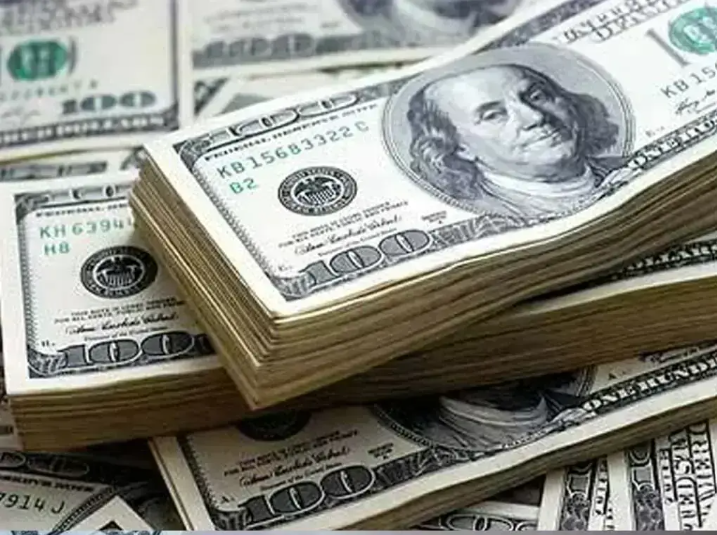
HONG KONG: The US dollar and Japanese yen remained under pressure on Tuesday as investors leaned toward riskier currencies, amid hopes for a potential US-Iran agreement that could reopen Gulf shipping routes.

With a ceasefire nearing its expiry this week, uncertainty continues around Iran peace talks, as Tehran has yet to determine its next steps following recent tensions. Still, market participants believe both sides are motivated to secure a deal. Donald Trump said negotiations are moving “relatively quickly” and are expected to produce better terms than previous agreements.
The euro traded at $1.1782, while the British pound (sterling) stood at $1.35225, both slipping about 0.1% during the day. The Australian dollar, often seen as a risk-sensitive currency, also declined 0.1% to $0.7171 in early trading.
The dollar index, which tracks the greenback against a basket of major currencies including the euro and yen, held steady at 98.087 after falling 0.2% in the previous session.
Carol Kong, a currency strategist at Commonwealth Bank of Australia, said, “I think the talks between those two parties will be the key driver in the next 24 hours. Markets are just in a wait-and-see mode.”
She added that while Trump appears keen to finalize a deal quickly, outcomes will depend heavily on how negotiations unfold. “We still see two-sided risks to the U.S. dollar.”
Central bank outlook in focus
The Japanese yen hovered at 158.955 per dollar, staying close to the key 160 level, which traders view as a potential trigger point for intervention.
Expectations that the Bank of Japan will delay raising interest rates next week have weighed on the yen. Sources suggest policymakers are cautious due to uncertainty surrounding the Middle East conflict and its impact on Japan’s economic and inflation outlook.
Meanwhile, the New Zealand dollar (kiwi) rose 0.3% to $0.59085 after data showed the country’s annual inflation rate held at 3.1% in the first quarter—above the central bank’s target range—boosting expectations of further rate hikes.
In the United States, attention is on Kevin Warsh, Trump’s nominee to lead the Federal Reserve, who is set to tell lawmakers at his Senate confirmation hearing that he is “committed to ensuring that the conduct of monetary policy remains strictly independent.”
Investors are also watching upcoming US retail sales data for March, with forecasts pointing to a strong 1.4% increase.