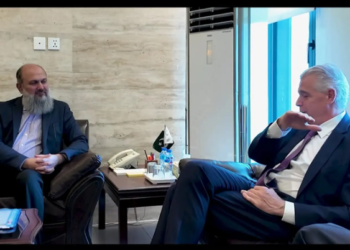
























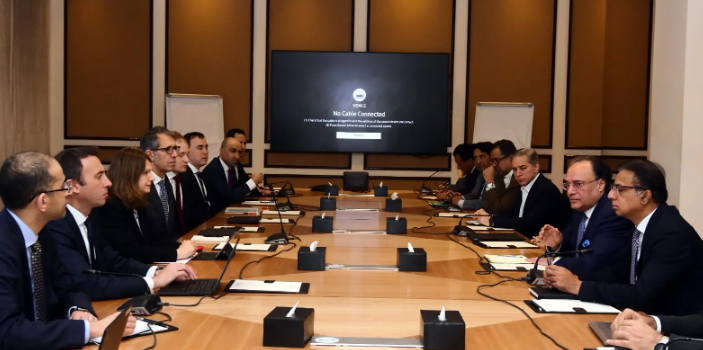
In an important development, Pakistan’s Ministry of Finance on Monday held a kick-off meeting with a mission from the International Monetary Fund (IMF), formally beginning discussions on the third review under the Extended Fund Facility (EFF) and the second review under the Resilience and Sustainability Facility (RSF).

“An IMF mission led by Iva Petrova has started discussions with the authorities in Karachi and Islamabad on the third review of Pakistan’s EFF arrangement and the second review of the RSF,” Mahir Binici, the IMF’s Resident Representative in Pakistan, told Business Recorder.
Discussions will continue virtually, he added.
The meeting marked the start of detailed engagements between Pakistani officials and the IMF team, focusing on performance benchmarks, fiscal targets, and broader macroeconomic indicators. Talks are scheduled to continue until March 11.
The IMF mission will evaluate Pakistan’s economic performance for the July–December 2025 period and begin negotiations for the release of the next tranche under both the EFF and RSF arrangements.
Officials said the review will cover tax collection, energy sector reforms, and progress on the privatisation programme. Governance and anti-corruption measures will also be examined, particularly transparency in appointments to key institutions.
Following a staff-level agreement (SLA) on the third EFF review and the second RSF review, the deal will require approval from the IMF’s Executive Board. Once approved, Pakistan is expected to receive around $1 billion under the EFF and $200 million under the RSF. So far, the country has secured $3.3 billion under the two facilities.
Last week, Finance Minister Muhammad Aurangzeb voiced confidence in the government’s fiscal management, stating that Pakistan remains “in a good position, particularly about tax collection”.
Meanwhile, the Pakistan Business Council (PBC), in a meeting with the visiting IMF delegation, acknowledged progress in controlling inflation and advancing fiscal consolidation under the ongoing Board-supported programme. However, it emphasised that macroeconomic stabilisation must now translate into tangible economic benefits.
The PBC also recommended abolishing the super tax, gradually reducing the corporate tax rate to 25%, and streamlining advance and withholding taxes that effectively operate as minimum taxes.