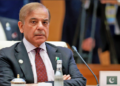


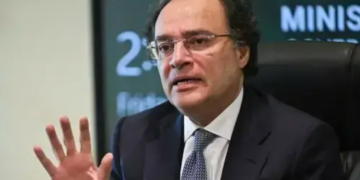




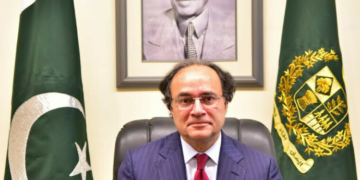




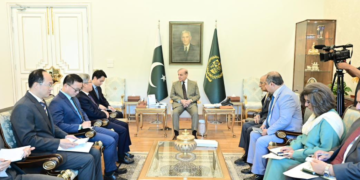


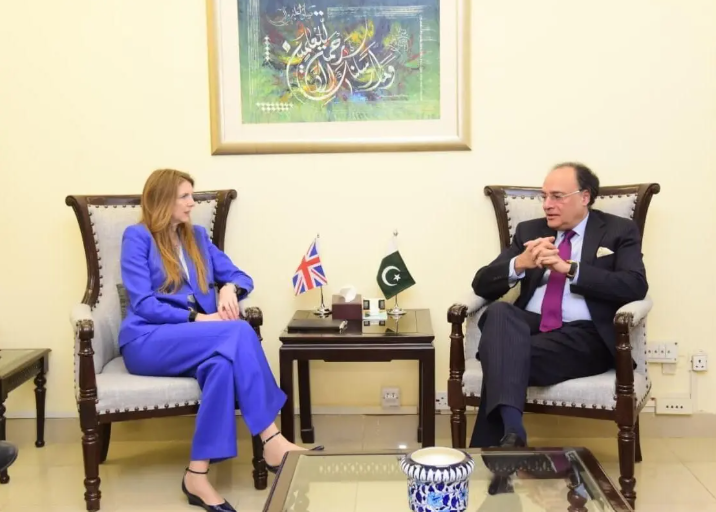
Pakistan is taking proactive steps to manage possible economic risks arising from evolving regional developments, Finance Minister Senator Muhammad Aurangzeb told British High Commissioner Jane Marriott during a meeting in Islamabad.

According to an official statement issued on Thursday, the meeting at the Finance Division focused on regional developments, Pakistan’s macroeconomic outlook, progress on economic reforms, and opportunities to strengthen bilateral economic cooperation.
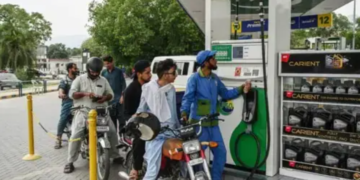
Aurangzeb informed the British envoy that the prime minister has formed a high-level committee comprising key federal ministries and the State Bank of Pakistan to closely monitor the situation and conduct daily reviews of critical sectors, particularly energy supplies and global commodity markets.
The committee is assessing supply chains, price trends, and possible disruptions in petroleum products, crude oil, coal, and gas, while also examining broader implications for inflation, external accounts, and financial stability.
The finance minister said Pakistan currently has adequate reserves and supply arrangements in place, adding that the government is conducting scenario planning and sensitivity analysis in case the regional situation persists. He noted that authorities are also considering energy conservation measures and coordinating with provincial governments to ensure responsible resource management while preventing unnecessary panic in the markets.
During the meeting, Aurangzeb also briefed the British High Commissioner on Pakistan’s ongoing economic reform agenda and its engagement with the International Monetary Fund (IMF) under the current programme.
He reaffirmed the government’s commitment to meeting IMF programme benchmarks and continuing structural reforms, particularly in tax policy, revenue mobilisation, governance, and institutional transparency. He highlighted efforts to expand the tax base through data-driven enforcement and improved compliance while ensuring fairness across sectors.
Aurangzeb further said that Pakistan’s macroeconomic indicators are showing signs of stabilisation and recovery.
He noted that economic growth in the first quarter of the current fiscal year reached 3.7%, supported by improvements in large-scale manufacturing and the continued resilience of the agriculture sector.
British High Commissioner Jane Marriott appreciated the government’s commitment to economic reforms and reiterated the United Kingdom’s support for Pakistan’s efforts to achieve macroeconomic stability and long-term growth.
She emphasised that the UK remains a strong partner in Pakistan’s development and economic transformation, including through support for reform initiatives, private sector engagement, and technical cooperation.
The High Commissioner also highlighted the importance of strengthening investor confidence, particularly in sectors such as mining and mineral development.
Both sides also discussed the importance of maintaining stability, good governance, and sustainable development in resource-rich regions to attract international investment and promote inclusive economic growth.