































Oil prices declined by around 4% on Wednesday as expectations of a possible ceasefire in the Middle East raised hopes of easing supply disruptions from the key producing region.

Brent crude futures fell by $4.89, or 4.7%, to $99.60 per barrel, after touching a low of $97.57 earlier in the session. Meanwhile, West Texas Intermediate crude dropped $3.54, or 3.8%, to $88.81 per barrel, after hitting an intraday low of $86.72.
Both benchmarks had gained nearly 5% on Tuesday before retreating in volatile trading.
Market sentiment shifted following reports that the United States had shared a 15-point proposal with Iran aimed at ending the conflict. Analysts said rising expectations of a ceasefire prompted profit-taking among investors.
“Expectations of a ceasefire have risen slightly and profit-taking is leading the market,” said Hiroyuki Kikukawa.
“But the outlook remains uncertain as to whether negotiations will succeed, limiting selling.”
Donald Trump said progress was being made in talks to end the war, while media reports suggested a potential month-long ceasefire to facilitate negotiations. The proposal reportedly includes steps such as dismantling Iran’s nuclear programme, halting support for proxy groups, and reopening the Strait of Hormuz.
However, analysts cautioned that uncertainty around negotiations could keep markets volatile. Priyanka Sachdeva noted that developments in the Middle East would remain the “dominant price driver” in the near term.
The conflict has severely disrupted shipments through the Strait of Hormuz, which typically carries about one-fifth of global oil and gas supply, creating what the International Energy Agency described as the largest oil supply disruption on record.
“The market outlook remains tight notwithstanding the prospects of a war off-ramp,” said Saul Kavonic.
“Even if a ceasefire is implemented this week and flows through Strait of Hormuz resume, it’s not clear all shut-in production will resume until there is more clarity on the durability of a ceasefire.”
Meanwhile, Iran informed the United Nations Security Council and the International Maritime Organization that “non-hostile vessels” could pass through the Strait of Hormuz if coordinated with its authorities.
Despite this, military activity continued, with reports indicating that the United States was preparing to deploy additional troops to the region.
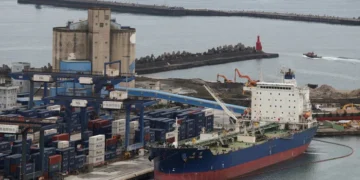
To offset disruptions, Saudi Arabia increased oil exports from its Yanbu port on the Red Sea to nearly 4 million barrels per day last week, according to shipping data.
In the United States, crude inventories rose by 2.35 million barrels in the week ending March 20, while gasoline stocks increased by 528,000 barrels and distillate inventories rose by 1.39 million barrels, according to market sources citing industry data.