


























NEW YORK: Oil prices climbed roughly 5% on Monday after Iran escalated attacks targeting the United Arab Emirates and vessels operating in the Gulf region over the past 24 hours.

Brent Crude futures rose by $5.75, or 5.3%, reaching $113.92 per barrel at 12:03 p.m. EDT (1603 GMT). Meanwhile, West Texas Intermediate crude gained $3.54, or 3.5%, to trade at $105.48.
Iran’s Revolutionary Guards Navy released a map claiming an expanded operational zone near the Strait of Hormuz, now including UAE ports such as Fujairah and Khorfakkan, along with the coastline of Umm Al Quwain.
Before recent tensions, nearly 20% of global oil and liquefied natural gas shipments moved through the strait, prior to strikes launched against Iran on February 28 by the United States and Israel.
Donald Trump stated on Sunday that the U.S. would begin assisting vessels stranded in the Gulf. On Monday, the U.S. military confirmed that two Navy guided-missile destroyers entered the area to counter an Iranian blockade, while two American merchant ships successfully passed through the strait.
“The path for prices remains skewed to the upside as long as flows through the strait remain restricted,” UBS analyst Giovanni Staunovo said.
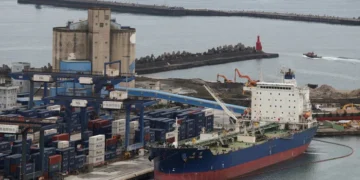
South Korea reported a fire and explosion aboard a vessel operated by HMM in the strait. Earlier, the UAE accused Iran of launching a drone strike on an empty crude tanker owned by Abu Dhabi National Oil Company during transit.
The United Kingdom Maritime Trade Operations reported an incident involving a cargo ship about 36 nautical miles north of Dubai, along with another earlier event near the UAE.
The UAE’s energy minister—following the country’s recent exit from OPEC—said the nation remains committed to meeting global oil demand without restrictions while coordinating with other producers.
Meanwhile, OPEC+ announced plans to increase output targets by 188,000 barrels per day in June for seven member countries, marking the third consecutive monthly supply increase.