

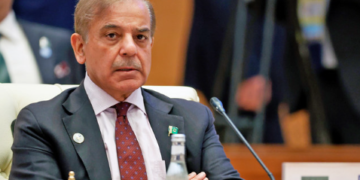
















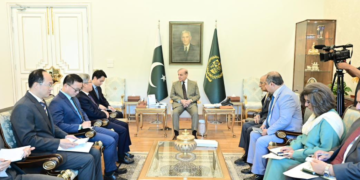





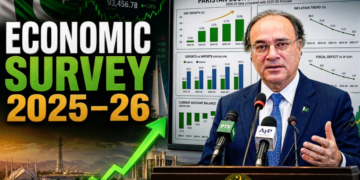


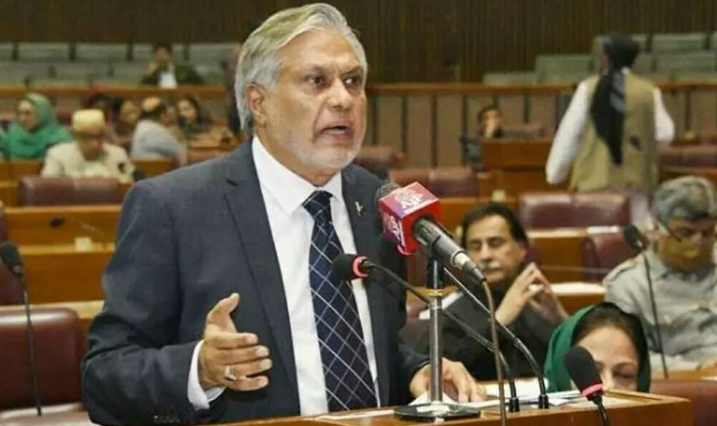
The Ministry of Finance on Thursday rejected reports claiming that Prime Minister Shehbaz Sharif had handed the budget-making process to Deputy Prime Minister Ishaq Dar, describing the assertions as “factually incorrect” and “misleading”.

In a clarification, the ministry said an article suggesting that the budget process had been shifted away from the Finance Division created a false impression regarding the role of a recently formed high-level review committee.
“The Ministry of Finance strongly rejects the misleading and speculative impression created by the Express Tribune story titled ‘PM hands budget-making to Dar’, published on May 14, 2026,” the statement said.
According to the ministry, the report “incorrectly portrays the constitution of a high-level review committee by the Prime Minister as a ‘handover’ of the budget-making process from the Finance Division or as a ‘sidelining’ of the finance minister”.
“This interpretation is factually incorrect, misleading and does not reflect the actual mandate or functioning of the committee,” it added.
The ministry explained that the committee was established to review and analyse certain tax policy proposals prepared by the Tax Policy Office ahead of the upcoming federal budget.
“Such consultative and inter-ministerial review mechanisms are neither unusual nor extraordinary,” it stated.
The statement added that the prime minister, as head of the government, “is fully within his constitutional and administrative authority to seek broader input from relevant cabinet members before finalisation of tax proposals that may impact businesses, inflation, investment climate and the wider economy”.
The ministry reiterated that “at no stage has the budget-making process been shifted away from the Ministry of Finance or the Finance Division”.
It further said that preparation of the federal budget continues under the leadership of Finance Minister Muhammad Aurangzeb, who also remains actively engaged with the International Monetary Fund (IMF) and other global financial institutions on fiscal and macroeconomic matters.
The ministry added that a separate committee formed for enforcement measures is aimed at improving revenue administration and enforcement proposals through consultation with relevant stakeholders.
“Such coordination mechanisms are a normal feature of governance and fiscal management,” it said.
The statement concluded by reaffirming that the federal budget remains a collective constitutional and cabinet-driven exercise, with the Ministry of Finance maintaining its central institutional role.
“The ministry expects responsible sections of the media to avoid speculative interpretations and to report institutional processes with accuracy, context and due professional responsibility,” it added.