



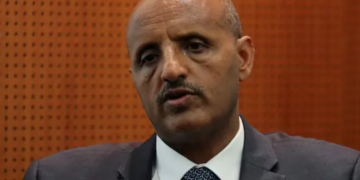















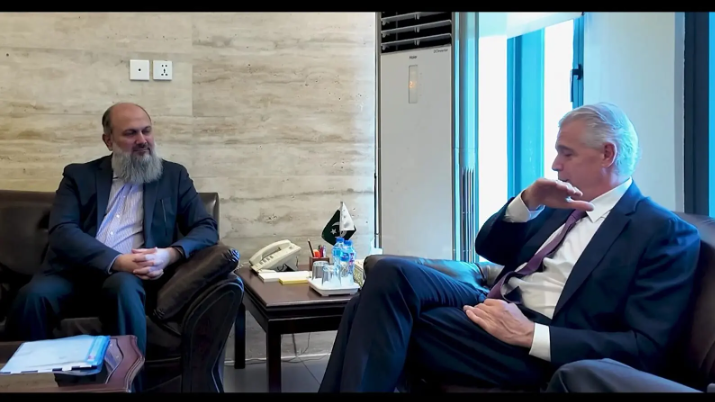
Federal Minister for Commerce Jam Kamal Khan held talks with a delegation from Philip Morris International (PMI), led by Marco Mariotti, President for CIS and Central Asia, to discuss challenges facing Pakistan’s tobacco sector, including illicit trade, regulatory shortcomings, and export opportunities, according to an official statement issued on Thursday.

During the meeting, the delegation highlighted the growing scale of illegal cigarette trade in the country, estimating annual revenue losses of nearly Rs350 billion, equivalent to around $1.25 billion.
The delegation informed the minister that nearly 45 to 47 billion cigarettes are being sold without tax payments, creating what it described as an uneven playing field for documented businesses operating within the formal economy.
Discussions also covered structural weaknesses in the tobacco supply chain, including tobacco leaf procurement, under-reporting of production, and inadequate traceability systems. According to the delegation, undocumented manufacturers continue to exploit loopholes and weak monitoring mechanisms to access raw materials and expand illegal production.
The statement noted that participants stressed the issue goes beyond taxation, raising concerns related to undocumented income, money laundering, and wider economic distortions.
The delegation further stated that while registered companies comply with strict regulations, a limited number of actors disproportionately benefit from the undocumented segment of the market, placing additional financial and compliance pressure on formal businesses.
The meeting also reviewed concerns regarding enforcement, with participants noting that laws, tax stamp systems, and regulations already exist but are implemented inconsistently. They stressed that effective enforcement requires coordinated efforts from both federal and provincial authorities.
The role of the Pakistan Tobacco Board (PTB) also came under discussion, with participants pointing out that although the board is responsible for crop estimation and price-setting, its enforcement powers remain limited. They emphasised the need to strengthen and restructure the PTB to improve documentation and monitoring within the sector.
Participants additionally discussed policy challenges linked to Pakistan’s commitments under the International Monetary Fund (IMF) programme, particularly the gradual easing of import restrictions and equal treatment of commercial and industrial importers. Stakeholders warned that while such reforms are aimed at trade liberalisation, they could complicate efforts to regulate key inputs used in cigarette manufacturing.
Jam Kamal described the issue as a “multi-layered challenge” requiring a comprehensive strategy covering the entire supply chain, from tobacco cultivation to retail-level enforcement.
He said the primary issue was weak enforcement rather than a lack of policy, and stressed the need for stronger coordination between federal and provincial authorities, including agencies such as the Federal Board of Revenue (FBR) and the Federal Investigation Agency (FIA).
The minister reaffirmed the government’s commitment to supporting the formal sector, boosting exports, and ensuring a transparent and fair business environment. He also directed stakeholders to compile practical recommendations focused on improving enforcement, enhancing traceability, and gradually reducing the size of the undocumented economy.