
















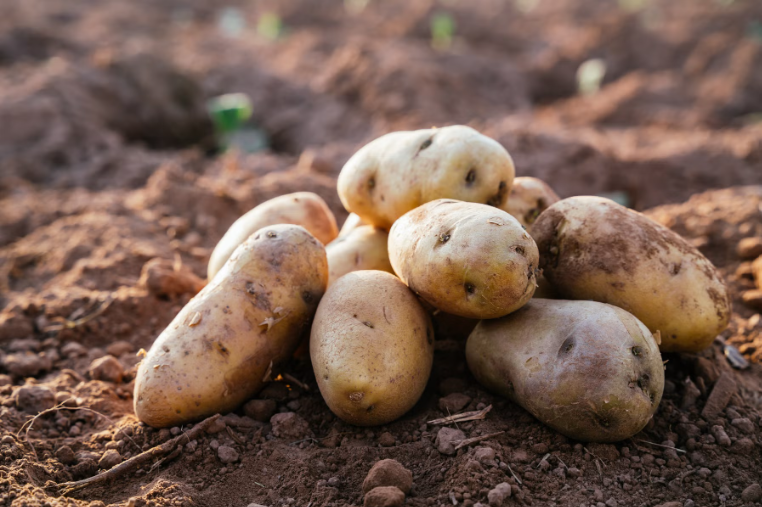
The government is formulating a focused export strategy to deal with surplus potato stocks, aiming to stabilise domestic prices while strengthening Pakistan’s presence in global markets.

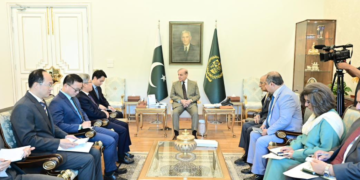
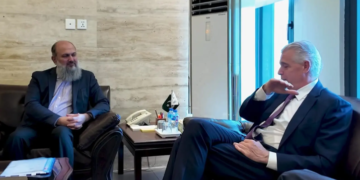
The development emerged during a high-level meeting chaired by Federal Minister for Commerce Jam Kamal Khan to assess the situation caused by excess potato production and to craft a coordinated plan to boost exports while safeguarding farmers’ interests, according to a statement issued on Tuesday.
Senior officials from the federal government and the Government of Punjab were present at the meeting. Rana Ihsaan Afzal Khan, Coordinator to the Prime Minister, and Secretary of Commerce Jawad Paul also took part in the discussions.
Participants reviewed updated production figures, domestic market trends, export performance, and logistical hurdles. It was observed that increased cultivation area, combined with leftover stocks from the previous season, has resulted in excess supply, putting downward pressure on farm-gate prices amid difficult global market conditions.
The minister emphasised that the primary impact of the surplus is being felt by farmers due to depressed prices, and therefore any support mechanism should prioritise direct assistance to farmers rather than artificial price interventions that may distort the market.
Discussions centred on enhancing export competitiveness, particularly in Central Asian and other emerging markets. It was agreed that a targeted and time-bound freight facilitation mechanism could be evaluated, subject to fiscal feasibility and clearly defined benchmarks, to help exporters manage rising logistics costs without creating long-term distortions.
Jam Kamal also directed that business-to-business engagements with key destinations, including Central Asia, the Middle East, and Asia-Pacific markets, be intensified to expand buyer linkages and diversify export destinations.
He stressed the importance of coordinated and data-driven decision-making between the federal government and the Government of Punjab, instructing relevant departments to compile updated production, export, and logistics data to develop a comprehensive proposal for consideration.
He observed that sustainable solutions must be market-aligned and fiscally responsible.
Jam Kamal reiterated the government’s commitment to supporting both farmers and exporters through practical and balanced policy measures, ensuring stability in the agricultural sector while maintaining competitiveness in international markets.