




























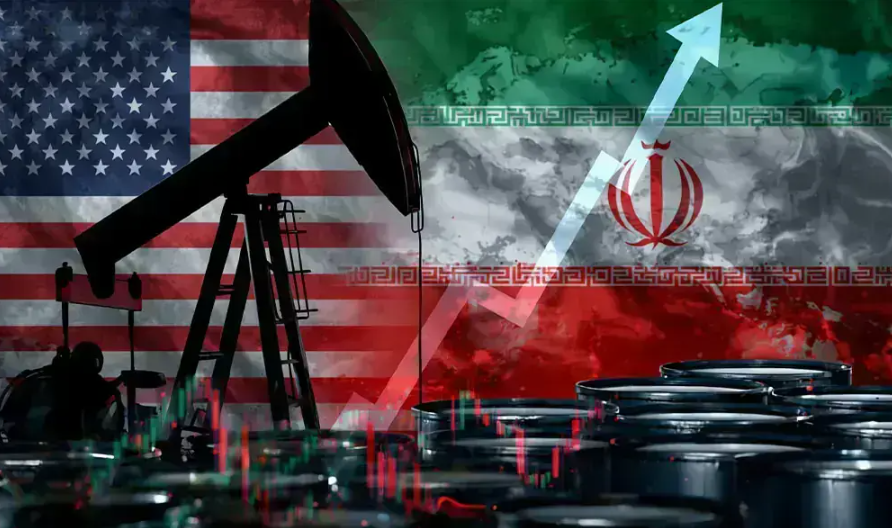
SINGAPORE: Oil prices climbed sharply on Thursday after Tehran announced the closure of the Strait of Hormuz, a vital global energy corridor, following fresh US strikes on Iran. Market concerns intensified after President Donald Trump warned of further military action if a peace agreement is not reached.

As of 0243 GMT, Brent crude futures advanced by $1.48, or 1.59%, to $94.58 per barrel, while US West Texas Intermediate (WTI) crude gained $1.71, or 1.90%, to trade at $91.74 per barrel.
Earlier in the session, US crude futures had surged by more than $3.
Iran’s highest joint military command said on Thursday that the Strait of Hormuz had been closed to oil tankers and commercial vessels, warning that any ship attempting to pass through the waterway would come under fire.
US launches new strikes on Iran after helicopter downed
“It once again suggests a deal is still some way off and that energy flows from the Persian Gulf will remain heavily constrained,” said ING analysts in a note to clients.
The analysts added that the latest escalation in hostilities had driven oil prices higher during early trading hours.
On Wednesday, the US military stated on X that commercial shipping continued to move through the strait and reported that no US naval vessels had been hit in the area. The statement came after Iranian state media claimed that US ships near the strategic waterway had been targeted by missiles and drones.
Fresh US strikes on multiple sites across Iran began at 5:15 p.m. EDT (21:15 GMT) on Wednesday, marking another escalation in tensions between the two countries. The renewed hostilities threaten to unravel a fragile ceasefire reached in early April that had temporarily halted the conflict.
Speaking to Fox News correspondent Trey Yingst on Wednesday evening, Trump said the military action would end soon but warned that he would “bomb the shit out of them” if Iran’s leadership failed to immediately agree to a deal with Washington.
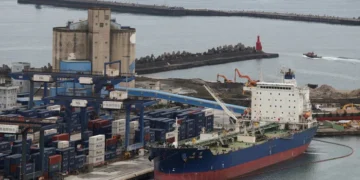
The prolonged disruption in the Strait of Hormuz, through which roughly one-fifth of the world’s oil and gas supplies normally pass, has continued to support higher energy prices.
Separately, data released by the US Energy Information Administration (EIA) showed that US crude stockpiles fell by 7.2 million barrels to 426.5 million barrels in the week ending June 5. Analysts surveyed by Reuters had forecast a decline of 4 million barrels.
Since the conflict began on February 28, total US crude inventories, including strategic reserves, have dropped by 79 million barrels as the United States increased supply to offset disruptions caused by the effective shutdown of the strait.
Highlighting the strain on global supplies, a Reuters survey found that OPEC production in May fell to its lowest level in more than 20 years. The decline was driven by a US naval blockade affecting Iranian exports and reduced shipments from other Gulf producers following Tehran’s effective closure of the crucial maritime route.