

























Oil prices continued to rise on Tuesday as US President Donald Trump intensified his rhetoric against Iran, warning of stronger action if Tehran fails to reopen the Strait of Hormuz, a critical global oil transit route.

Brent crude futures increased by 57 cents, or 0.5%, to $110.34 per barrel by 1202 GMT, while US West Texas Intermediate (WTI) crude climbed $1.26, or 1.1%, to $113.67.
Trump has threatened to rain “hell” on Tehran if it does not meet his Tuesday 8 p.m. EDT deadline to reopen the strait. “They could be taken out,” Trump warned, pledging further action if a deal is not reached.
In response to a US proposal conveyed through Pakistan as a mediator, Iran rejected a ceasefire, insisting that a permanent end to the war is required, while resisting pressure to reopen the waterway.
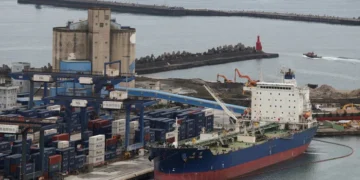
Iranian forces effectively closed the Strait of Hormuz following US and Israeli strikes that began on February 28, disrupting a route that typically handles around 20% of global oil shipments.
“Clock-watching is now playing almost as big a role in oil markets as the fundamentals themselves in the run-up to Trump’s ultimatum deadline,” said Tim Waterer, chief market analyst at KCM Trade.
“The potential for a ceasefire deal offers some counterweight and could spark a relief move lower if it gains traction, but persistent supply worries from the Hormuz chokepoint and damaged energy facilities are keeping the floor under prices.”
On Monday, Iran’s Revolutionary Guards stopped two Qatar liquefied natural gas tankers and instructed them to remain in place without explanation, sources told Reuters. Shipping data, however, indicates limited vessel movement through the strait since last Thursday.
The UN Security Council is expected to vote on a resolution aimed at safeguarding commercial shipping in the Strait of Hormuz, though in a diluted form after China opposed authorising the use of force, diplomats said.
Regional tensions remained high, with explosions reported in Damascus and surrounding areas on Tuesday, attributed to Israeli interception of Iranian missiles, according to Syrian state media.
Saudi Arabia reported intercepting and destroying seven ballistic missiles targeting its Eastern Region, with debris falling near energy infrastructure, its defence ministry said.
The conflict has tightened global oil markets, with spot premiums for US WTI crude reaching record highs as refiners in Asia and Europe seek alternative supplies amid disrupted Middle Eastern flows.
Saudi Arabia’s state oil giant Aramco raised the official selling price of its Arab Light crude for May delivery to Asia, setting a record premium of $19.50 per barrel above the Oman/Dubai benchmark.
Adding to supply risks, Russia said Ukrainian drones attacked the Caspian Pipeline Consortium’s Black Sea terminal on Monday, damaging loading facilities and storage tanks. The terminal handles about 1.5% of global oil supply.
Meanwhile, OPEC+ agreed on Sunday to increase oil output quotas by 206,000 barrels per day in May, though the actual boost may be limited as key producers face export constraints due to disruptions in the Strait of Hormuz.