




























Oil prices declined by around 1% on Wednesday after US President Donald Trump said the conflict involving Iran could end “very quickly,” although uncertainty surrounding ongoing peace negotiations and Middle Eastern supply disruptions continued to keep markets cautious.

Brent crude futures dropped $1.11, or 1.0%, to $110.17 per barrel by 0640 GMT, while US West Texas Intermediate (WTI) crude futures fell $1.12, or 1.1%, to $103.03 per barrel.
“Benchmark prices softened on a potential deal as the market gauges the geopolitical outcomes,” said Emril Jamil, senior oil research analyst at LSEG.
“However, prices are likely to still exhibit some upside potential even if a deal is concluded, given that supply will likely not return to pre-war levels immediately,” he added.
Both oil benchmarks had already fallen nearly $1 on Tuesday after US Vice President JD Vance stated that Washington and Tehran had made progress in negotiations, with both sides seeking to avoid renewed military conflict.
“Investors are keen to gauge whether Washington and Tehran can actually find common ground and reach a peace agreement, with the US stance shifting daily,” said Toshitaka Tazawa, an analyst at Fujitomi Securities.
“Oil prices are likely to remain elevated given the possibility of renewed US attacks on Iran and expectations that, even if a peace deal is reached, crude supply will not quickly return to pre-war levels,” he said.
Despite Trump telling US lawmakers late Tuesday that the war could end quickly, he also warned earlier that the United States might still launch another strike on Iran. He revealed he had come close to authorising military action before delaying the decision.
His remarks followed earlier comments in which he said he had paused plans to resume hostilities after Tehran presented a fresh proposal aimed at ending the US-Israeli conflict.
Trump further claimed that Iranian leaders were eager to secure a deal and warned that another US strike could occur within days if negotiations failed.
Meanwhile, Citi said it expects Brent crude prices to climb to $120 per barrel in the near term, arguing that markets are underestimating the risk of prolonged supply disruptions and broader geopolitical threats.
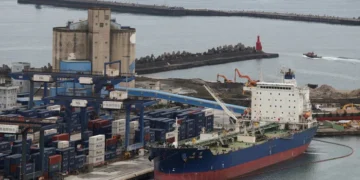
Although some oil tankers have resumed passing through the Strait of Hormuz, traffic remains significantly lower than normal levels, with only a fraction of the roughly 130 vessels that crossed daily before the conflict.
Two supertankers carrying Middle Eastern crude reportedly exited the Strait of Hormuz on Wednesday, while another vessel carrying 6 million barrels of oil began departing after remaining stranded in the Gulf for over two months.
Countries are increasingly relying on strategic and commercial oil reserves to offset supply shortages caused by the conflict.
In the United States, crude oil inventories declined for a fifth consecutive week last week, according to market sources citing American Petroleum Institute data. Fuel inventories also registered declines.
A Reuters survey showed analysts expect official data from the US Energy Information Administration (EIA) to reveal a drop of around 3.4 million barrels in crude stockpiles for the week ending May 15.