





























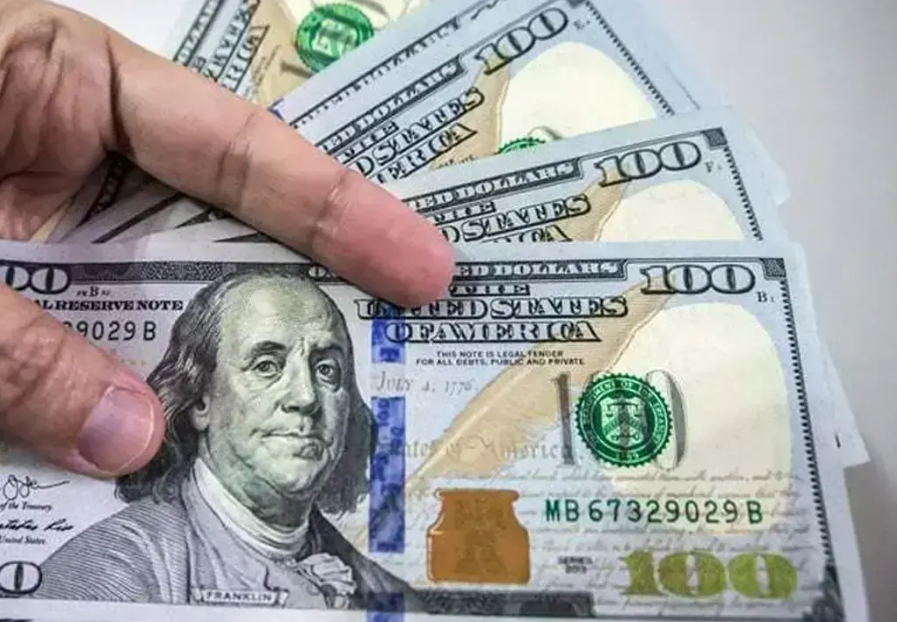
SINGAPORE: The US dollar traded cautiously on Thursday as fresh American military strikes in the Middle East weighed on investor confidence, while a sharp rise in US consumer inflation in May added uncertainty to expectations for Federal Reserve policy.

Currency markets have remained relatively calm this week as traders balance the fragile ceasefire in the Middle East against renewed military exchanges between the United States and Iran, dampening hopes of a swift diplomatic resolution.
The euro was trading at $1.1553, recovering slightly from the 10-week low reached last week. However, the single currency has surrendered much of the gains recorded after a ceasefire was agreed in early April. Investors are now focused on the European Central Bank’s policy decision later in the day, with markets expecting another interest rate increase to combat inflation.
Sterling stood at $1.33905, while the dollar index, which tracks the US currency against six major rivals, slipped to 99.903 following confirmation from the US military that strikes against multiple targets in Iran had been completed.
The United States launched a new wave of attacks overnight, with President Donald Trump warning that further military action would follow if a peace agreement is not reached.
The latest escalation heightened market anxiety and contributed to rising energy prices, with Brent crude futures gaining more than 2% to reach $95.40 per barrel.
Despite the geopolitical tensions, currency markets remained relatively stable, and the dollar showed limited movement during early Asian trading.
“We still have a bit of news fatigue in the market, this kind of escalation a few weeks ago would probably have had Brent back up through $100 a barrel and the dollar surging,” said Nick Twidale, chief market analyst at ATFX Global.
“It comes down to the markets craving a bit of certainty again,” said Twidale. “Is this conflict and closure of the Strait going to be the new status quo … or another ‘negotiating tactic’ that brings peace hopes back to the table.”
Rate hike concerns remain in focus
Data showed the US Consumer Price Index rose 4.2% in the 12 months to May, marking the strongest annual increase since April 2023. Nevertheless, many economists believe the threshold for further monetary tightening remains high.
Core CPI, which excludes volatile food and energy prices, increased by 0.2% during the month after a 0.4% rise in April, supporting expectations that inflationary pressures from higher energy costs may remain manageable.
James Knightley, chief international economist at ING, said labour costs continue to be a major factor for businesses, but moderating wage growth could help reduce inflationary pressures.
“This should all help to keep inflation expectations in check, so while we no longer expect the Fed to cut interest rates this year given improved economic momentum, we don’t expect a rate hike either,” Knightley said.
Market participants are now fully pricing in a 25-basis-point interest rate increase in December, a significant shift from earlier expectations of two rate cuts this year before the Iran conflict began in late February.
The Japanese yen traded at 160.52 per dollar, keeping investors alert to the possibility of intervention by Japanese authorities to support the currency.
Meanwhile, Bank of Japan Governor Kazuo Ueda has been hospitalised for medical treatment and will be absent from the central bank’s June 15-16 policy meeting, where policymakers are widely expected to raise interest rates.
“We do not expect Ueda’s absence to impact on the BOJ’s policy decision,” said Carol Kong, a currency strategist at Commonwealth Bank of Australia. “We and the market continue to expect a 25bp rate hike next week.”
Elsewhere, the Australian dollar traded at $0.7006 after touching its lowest level in nine weeks earlier in the day, while the New Zealand dollar remained largely unchanged at $0.5797.