


















Fitch Ratings has reaffirmed Pakistan’s long-term Foreign-Currency Issuer Default Rating (IDR) at ‘B-’ with a stable outlook, noting that the country’s role in ceasefire diplomacy could bring strategic advantages and help ease external pressures.

The agency said the rating reflects improvements in fiscal consolidation and macroeconomic stability, broadly aligned with Pakistan’s programme with the International Monetary Fund, which continues to support its funding position.
“Foreign exchange (FX) buffers rebuilt over the past year provide a cushion against the economic impact of the war in the Middle East, while Pakistan’s role as a ceasefire broker may provide tangible benefits and partly offset external pressures.”
However, the report warned that Pakistan remains highly exposed to global energy price shocks, particularly if they trigger a sharp decline in FX reserves.
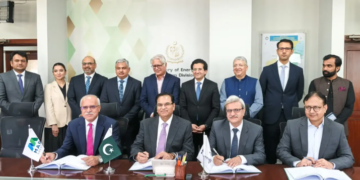
Fitch Ratings emphasized that Pakistan’s IMF programme remains critical. Authorities recently reached a staff-level agreement on the third review of the Extended Credit Facility and the second review of the Resilience and Sustainability Facility in March 2026, which could unlock $1.2 billion pending board approval.
“The programme will continue to provide a key policy anchor, particularly for the fiscal framework, and will help mobilise additional multilateral and bilateral support,” Fitch Ratings said.
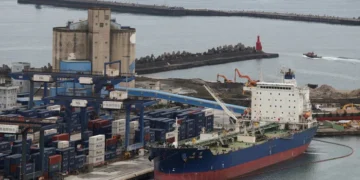
The agency highlighted Pakistan’s reliance on energy imports, noting its vulnerability to disruptions in the Strait of Hormuz.
“Pakistan sources up to 90% of its oil from the Gulf and has limited storage capacity, creating high exposure to the Middle East conflict and constricted energy supply via the Strait of Hormuz,” said Fitch Ratings.
It added that fuel subsidies introduced since early March have been managed through budget reallocations, higher pump prices, and a shift to targeted support.
“We expect the overall impact on the fiscal deficit to be contained, as the government is likely to cut other spending,” said Fitch Ratings.
The agency projected rising inflation due to higher global energy prices and policy adjustments.
“We expect inflation to average 7.9% in FY26 (ending 30 June 2026), above the FY25 level but well below the 23.4% in FY24,” it said.
Meanwhile, the State Bank of Pakistan has reduced the policy rate significantly, though interbank rates have recently risen amid inflation concerns tied to energy supply constraints.
“The shock will detract from GDP growth, but we still expect growth of 3.1% in FY26, up slightly from 3.0% in FY25, due to improved confidence from lower borrowing costs,” said Fitch.
Fitch estimates Pakistan’s external debt repayments will increase to $12.8 billion in FY26, while noting that a $3.5 billion deposit to the United Arab Emirates was repaid in April.
“Our amortisation projections exclude another $9.2 billion in bilateral deposits and loans we expect to be rolled over.
“We expect debt to be financed mainly by IMF and other multilateral and bilateral inflows, followed by commercial financing. Pakistan plans to issue a panda bond this fiscal year.”
The agency also expects the primary surplus to narrow.
“We expect the primary surplus to narrow to 2.1% of GDP in FY26, 0.3pp below the official target,” it said.
Looking ahead, Fitch forecasts a small current account deficit and a modest decline in FX reserves.
“We expect the current account deficit, and repayment of a $1.3 billion Eurobond and the UAE deposits in April to bring FX reserves down to $21.3 billion by the end of FY26.
“This will cover 2.9 months of current external payments, from $22.6 billion at the end of FY25. Net FX reserves remain negative, reflecting FX reserve deposits of domestic commercial banks, a Chinese central bank swap line and bilateral deposits at the SBP.”
The report also noted rising tensions between Pakistan and Afghanistan since February 2026, though their broader economic impact is expected to remain limited.
“Our baseline does not include further escalation, given Pakistan’s financing constraints, but the conflict presents a considerable risk to its commitment to fiscal consolidation.”