










The Government of Pakistan has suggested advancing towards a Free Trade Agreement (FTA) with the United Kingdom, describing it as a “natural progression” in their growing trade relationship.

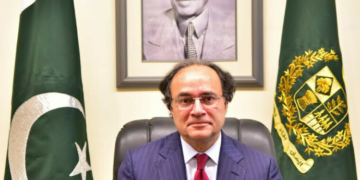
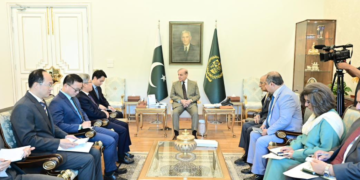
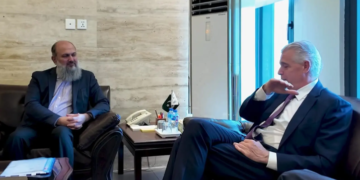
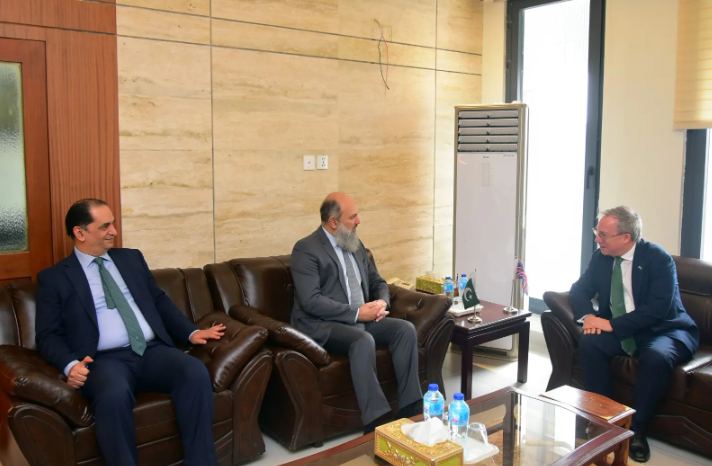
The proposal came up during a high-level meeting in Islamabad between Federal Minister for Commerce Jam Kamal Khan and Edward Llewellyn, Director General Political of the United Kingdom. Discussions covered bilateral trade, regional security, and the evolving global energy landscape, according to an official statement released on Thursday.
British High Commissioner Jane Marriott was also present at the meeting.
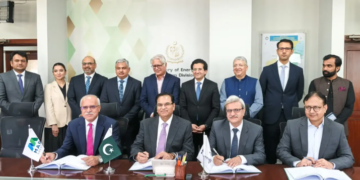
Both sides reaffirmed their commitment to strengthening trade ties between Pakistan and the United Kingdom and reviewed progress under the Pakistan–UK Trade Dialogue. They welcomed the formation of a working group on healthcare and life sciences and agreed on the need to activate additional groups focusing on IT, agriculture, professional services, education, and skills development.
Speaking at the meeting, Jam Kamal highlighted Pakistan’s commitment to continuing structural reforms aimed at improving the trade environment and attracting foreign investment. He noted that tariff adjustments and regulatory reforms were designed to make the country more competitive and business-friendly.
He emphasised that “consistency in policy and gradual reforms are key to building long-term investor confidence.”
Secretary of Commerce Jawad Paul pointed out that the ongoing trade dialogue could provide a solid base for future collaboration. He proposed that both countries should consider moving towards an FTA over time, calling it a natural next step in their expanding economic partnership.
The UK side, meanwhile, asked Pakistan to consider its suggestions regarding proposed changes to the intellectual property framework and stressed the importance of policy stability.
In his remarks, Ed Llewellyn noted that investor confidence relies not only on policies but also on clear signals from the government. He said transparency and timely consultations would help reassure international investors and promote further investment.
Both sides also discussed Geographical Indicators (GI) and trademark registration issues related to Pakistani Basmati rice, agreeing to continue engagement on the matter.
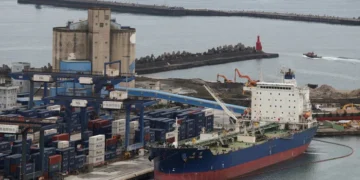
On global issues, the two sides highlighted the strategic importance of the Strait of Hormuz, expressing concern over rising shipping costs and risks to global trade. Pakistan raised concerns about increased maritime charges affecting its exports and called for a fair assessment of risk zones.
The meeting concluded with an agreement to maintain close coordination and continue dialogue to address shared challenges while further strengthening cooperation in trade, energy, and regional stability.