



















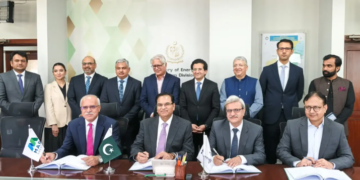



LAHORE: The Pakistan Sugar Mills Association (PSMA) has called on the government to allow immediate export of surplus sugar and move toward full deregulation of the sector, warning that continued restrictions are causing financial strain despite strong production.

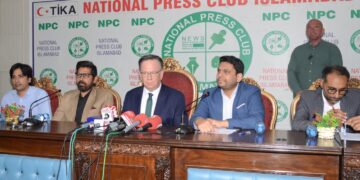
Speaking at a press conference, PSMA Chairman Ch Zaka Ashraf said the sugar industry—Pakistan’s second-largest agro-based sector after textiles—plays a vital role in the economy, generating over Rs1,000 billion in annual activity and contributing around Rs300 billion in taxes. The sector also provides import substitution worth approximately $5 billion each year.
The association said that despite being highly documented and compliant, the industry remains heavily regulated, particularly in the domestic market where provincial governments control ex-mill prices, supply, and payment timelines. “While nearly 70% of sugar used in commercial and industrial sectors is deregulated, the segment catering to domestic consumption is still heavily controlled, creating distortions in the market,” the PSMA officials stated.
PSMA noted that successive governments had pledged deregulation, but implementation has yet to take place. It argued that freeing the sector would improve efficiency, attract investment, and align it with market-driven mechanisms.
On production, the association said sugar output had reached about 7.5 million tons as of March 25, 2026, and is expected to hit 7.7 million tons by the end of the crushing season. With an additional 100,000 tons from beetroot, total availability is projected at 8.071 million tons.
Against an estimated domestic consumption of 7.02 million tons over 13 months, the country is expected to have a surplus of around 1.05 million tons.
“In light of this surplus and rising production costs, the industry is facing severe financial stress due to inventory carrying costs,” the association said, urging the government to permit exports without delay.
PSMA added that Pakistan has the capacity to produce up to 12 million metric tons of sugar annually, allowing exports of up to 6 million tons and generating as much as $4 billion in foreign exchange. It also highlighted the potential to earn an additional $1 billion through ethanol exports.
The association further called for the revival of ethanol blending policies in fuel, suggesting that up to 20% blending in petrol could help reduce reliance on imported fuel and support the local industry.
It also pointed to the sector’s role in energy generation through bagasse, noting that surplus electricity from sugar mills could support industrial demand and contribute to the national grid.
PSMA expressed satisfaction with improved sugarcane output this season, attributing it to better crop pricing and timely payments to farmers, which helped rebuild grower confidence.
Concluding, the association emphasized that timely policy decisions—particularly export approval and deregulation—are essential to stabilizing the industry, boosting exports, and supporting rural livelihoods.