


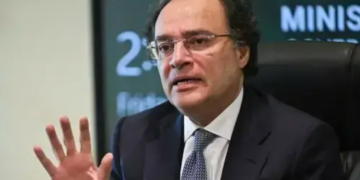

















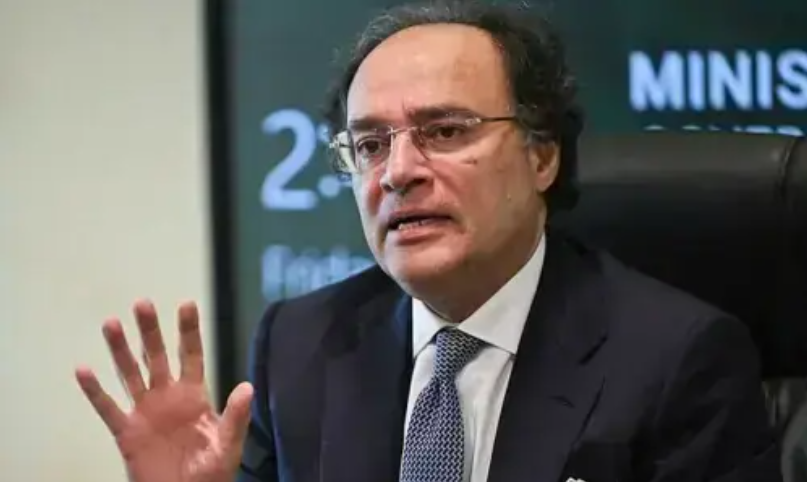
Finance Minister Muhammad Aurangzeb on Friday acknowledged that Pakistan’s corporate debt market remains significantly underdeveloped compared to the financing requirements of the economy, calling for accelerated reforms to strengthen the debt capital market, reduce dependence on bank financing, diversify funding sources, and create a more resilient financial system capable of supporting the private sector, particularly small and medium enterprises (SMEs).

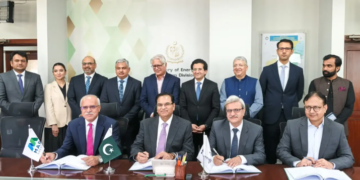
Chairing a meeting of the Capital Market Development Council (CMDC), Aurangzeb reviewed progress on capital market reforms, with discussions focused on expanding Pakistan’s corporate debt market and enhancing capital markets as a reliable source of long-term financing for businesses.
Aurangzeb observed that while the equity market has shown encouraging growth, the corporate debt market continues to lag behind the country’s financing needs. “Further efforts are required to deepen the debt capital market, reduce reliance on bank financing, promote diversified market-based financing, and create a more balanced and resilient financial ecosystem capable of meeting the evolving financing needs of the private sector, particularly the Small and Medium Enterprises (SMEs),” he said.
Participants reviewed the scope and terms of reference (TORs) for an ongoing external study on developing Pakistan’s local currency-linked bond market. The study will examine key reform areas, including sovereign financing, non-bank financial institutions, primary dealer arrangements, secondary market development, market infrastructure, hedging and derivatives markets, and the broader capital market framework.
The finance minister stressed that the study should produce practical, evidence-based recommendations supported by international benchmarks to help shape future reforms.
The meeting also considered findings from awareness surveys, experience assessments, and stakeholder consultations conducted by the Securities and Exchange Commission of Pakistan (SECP) to identify challenges faced by the country’s top 100 listed companies in accessing the corporate debt market.
While appreciating the progress made so far, Aurangzeb emphasized the importance of extending consultations beyond major listed firms to include medium-sized enterprises and other growth-oriented businesses that could benefit from capital market financing.
To accelerate reforms, Aurangzeb advised the SECP and the Pakistan Stock Exchange (PSX) to establish dedicated Debt Desks at the senior management level. These units would have clearly defined responsibilities, measurable performance targets, and accountability for driving implementation and monitoring progress.
The finance minister also highlighted the need to promote greater competition and institutional capacity among market intermediaries and infrastructure providers to improve efficiency, enhance service quality, and lower transaction costs for issuers and investors.
Participants further discussed simplifying the corporate debt issuance process through closer coordination among the SECP, PSX, and the Central Depository Company (CDC). In this regard, Aurangzeb called for a streamlined one-window listing framework featuring standardized procedures, end-to-end process mapping, enhanced digital integration, and improved online facilitation to make the process more transparent and accessible. He also directed the relevant institutions to publish a simplified corporate debt listing workflow on their websites.
The meeting also reviewed measures aimed at expanding Pakistan’s Islamic capital market, including initiatives to deepen the domestic Sukuk market, improve secondary market liquidity and trading, and encourage the issuance of green and sustainable financial instruments.
Participants examined policy proposals covering taxation, SME preparedness, financial literacy, digital investment platforms to widen investor participation, and institutional support to help more businesses access capital market financing.
Emphasizing the importance of execution, Aurangzeb said the council’s future work should be organized around thematic reform areas supported by dedicated working groups to speed up decision-making and implementation.
He further stressed that recommendations emerging from stakeholder consultations, technical studies, and international best practices should be converted into time-bound, actionable reforms with clearly assigned responsibilities, defined milestones, and regular progress reviews.
The meeting was attended by the chairman of the SECP, representatives from the State Bank of Pakistan, PSX, CDC, National Clearing Company of Pakistan Limited, Pakistan Banks’ Association, Pakistan Business Council, Tax Policy Office, and senior officials of the Finance Division.